
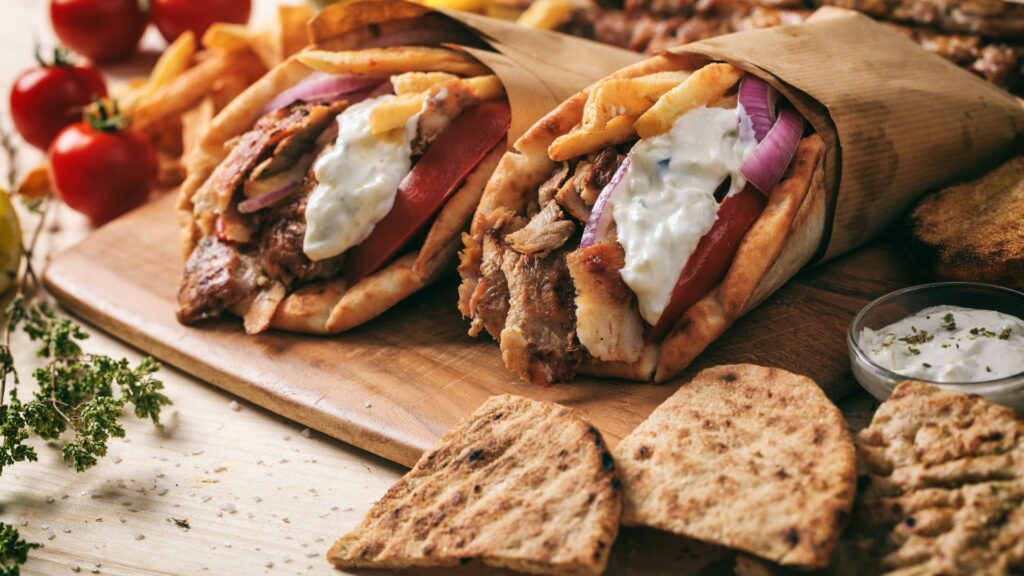
Gyros are one of the most beloved Greek street foods across the world. A classic gyro typically consists of seasoned meat: usually pork, chicken, beef, or lamb cooked on a vertical rotisserie. It’s often served wrapped in a soft pita, along with ingredients like tomatoes, onions, lettuce, and the signature creamy tzatziki sauce. Delicious? Absolutely. But are gyros fattening?
Like many comfort foods, gyros can be both nourishing and calorie-dense, depending on their preparation. But “fattening” isn’t always a black-and-white judgment. In this article, we’ll break down the nutritional facts, the role of each gyro component, and whether or not gyros deserve their “fattening” reputation.
Table of Contents
ToggleWhat’s in a Traditional Gyro?
Understanding whether gyros are fattening starts with understanding what’s in them. A standard gyro wrap includes:
- Meat (pork, chicken, lamb, or beef): Cooked on a vertical spit, often seasoned with garlic, oregano, and other Mediterranean spices.
- Pita bread: Soft, fluffy flatbread made with white flour.
- Tzatziki sauce: A Greek yogurt-based sauce with cucumber, garlic, olive oil, and lemon.
- Vegetables: Typically includes tomatoes, onions, and lettuce.
- Add-ons: In some variations, cheese, french fries, or extra sauces may be included.
Nutritional Breakdown of a Gyro
The average gyro sandwich contains roughly:
- Calories: 600–850 kcal
- Protein: 25–35 grams
- Fat: 30–45 grams
- Carbohydrates: 40–60 grams
- Sodium: 900–1,500 mg
Let’s look at how these macronutrients affect your health and how gyros fit into various dietary plans.
Protein: A Strong Point for Gyros
Gyros offer a solid source of lean protein, especially when made with chicken or lamb. A gyro can easily provide over 30 grams of protein, which helps with satiety, muscle repair, and metabolic function. Protein-rich meals are often recommended for people trying to lose fat while preserving muscle.
Fat Content: The Calorie Dense Contributor
The fat content in gyros is significant, especially when the meat is fatty (like pork or lamb) and when sauces are applied generously. Tzatziki is relatively low in fat compared to mayonnaise-based sauces, but other optional additions (like cheese or fried components) can push the fat content much higher.
While fat is essential in a balanced diet, it’s also calorie-dense (9 calories per gram) so large portions can quickly drive up your daily intake. That said, the type of fat matters. If olive oil and yogurt are used in the sauce, those are healthier sources of fat than fried ingredients.
Carbs and Bread
The pita wrap is usually made from white flour and adds 200–300 calories on its own. It provides carbohydrates but little fiber, which means it digests quickly and can spike blood sugar levels. For people on low-carb diets or those trying to control blood glucose, this is an important consideration.
Sodium Levels: A Hidden Risk
The salt content of a gyro can be high, especially due to the meat’s seasoning and sauces. One sandwich can easily contain over 1,000 mg of sodium, about half the recommended daily intake. For those watching their blood pressure or managing heart conditions, this is worth noting.
So, Are Gyros Fattening?
The honest answer: gyros can be fattening, but they don’t have to be.
Let’s clarify that: gyros are calorie-dense, and depending on the ingredients and portion size, they can contribute to weight gain if eaten in excess. But they also offer lean protein, vitamins from vegetables, and healthy fats when prepared thoughtfully.
When Gyros Can Be Considered Fattening:
- Loaded with pork or lamb with visible fat
- Served in large pitas made from refined flour
- Topped with creamy, high-fat sauces or cheese
- Accompanied by fries, extra oil, or sugary drinks
- Consumed frequently in a sedentary lifestyle
When Gyros Can Be a Healthy Meal:
- Made with grilled chicken or lean beef
- Served in whole-wheat or smaller pita wraps
- Filled with fresh veggies like tomatoes, onions, and cucumbers
- Topped with light tzatziki or yogurt-based sauce
- Paired with water, salad, or roasted vegetables
In other words, it’s about portion control and ingredient choices. Even something as indulgent-seeming as a gyro can be part of a healthy diet when made with care.
Healthier Ways to Enjoy a Gyro
If you love gyros but want to keep things healthy, consider the following strategies:
- Swap white pita for whole grain or lettuce wraps to cut refined carbs
- Choose grilled chicken over lamb or pork to reduce saturated fat
- Make tzatziki at home with Greek yogurt and avoid added oils or mayo
- Add extra veggies for fiber and volume
- Avoid fries or soda on the side to keep calorie load in check
- Watch the portion size: half a gyro can be enough when paired with salad
You can even create gyro bowls, which ditch the pita altogether and serve the meat, veggies, and sauce over greens or grains for a more balanced option.
FAQs About Gyros and Health
Is tzatziki sauce fattening?
Tzatziki is relatively low in calories and fat compared to creamy dressings. Made with Greek yogurt, cucumber, and herbs, it’s a good alternative, but portion control still matters.
Can I eat gyros on a low-carb or keto diet?
Only if you remove or replace the pita. The meat and tzatziki are relatively low-carb, but traditional gyros are too high in carbs for keto unless modified.
Are gyros processed?
It depends. Homemade gyros or those made fresh at restaurants may use real cuts of meat. However, some pre-packaged or chain gyros use processed, seasoned meat slices.
Are vegetarian gyros healthier?
They can be, especially when made with plant proteins like chickpeas or seitan, but be mindful of frying, sauces, and pita calories.
Final Thoughts
So, are gyros fattening? They can be, but they don’t have to be. Like most meals, the health impact of a gyro depends on its ingredients, portion size, and how often it’s consumed. A well-balanced gyro (made with lean meat, plenty of veggies, and light sauce) can offer satisfying nutrition without sabotaging your health goals.
For those who love the bold flavors of Mediterranean cuisine, a thoughtfully prepared gyro can be a delicious and guilt-free option. Just be mindful of what’s in your wrap and what’s on the side.
