
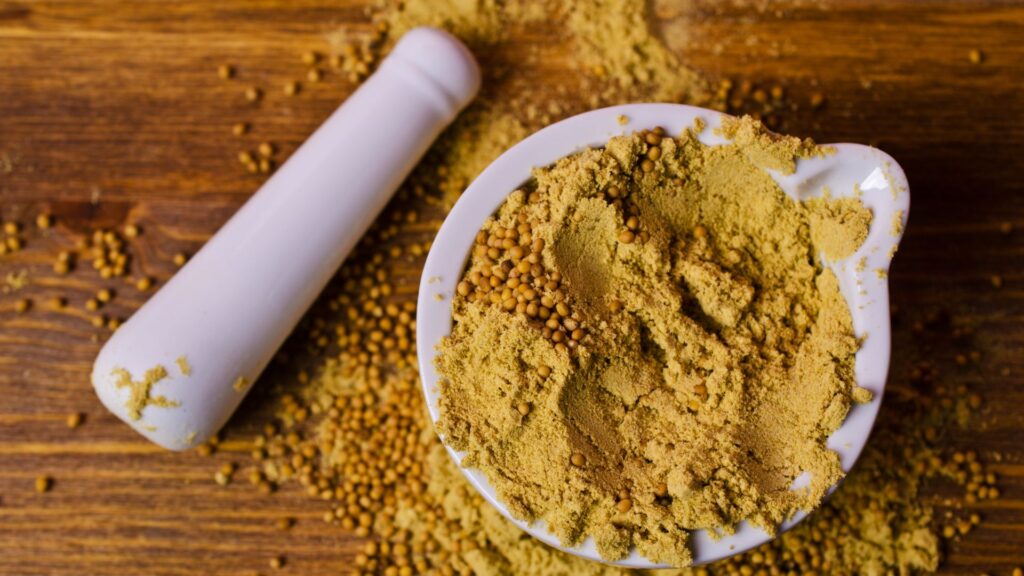
Powdered mustard is a versatile spice that adds bold flavor to dishes without the acidity of prepared mustard. Unlike the familiar squeeze bottle of yellow mustard, the powdered form allows for more control over flavor and consistency in recipes.
This article explores what powdered mustard is, how it is made, its various uses, and how it differs from other mustard products.
Table of Contents
ToggleWhat Is Powdered Mustard?
Powdered mustard, also called dry mustard or mustard flour, is a finely ground version of mustard seeds. It has no added ingredients, making it a pure spice that can be blended into sauces, dressings, and dry rubs.
The flavor is strong and slightly bitter when dry but becomes more pungent and spicy when mixed with water. Since it contains no liquid, it does not have the tangy vinegar taste found in prepared mustard.
This spice is commonly made from white, brown, or black mustard seeds, each offering a different level of heat. White mustard seeds create a mild powder, while brown and black seeds result in a spicier product.
How Is Powdered Mustard Made?
Powdered mustard begins with whole mustard seeds that are thoroughly cleaned and dried. The seeds are then hulled to remove the outer shell, leaving only the inner part, which contains the essential flavors.
Once the husks are removed, the seeds are ground into a fine powder using industrial mills or stone grinders. A finer grind results in a more concentrated spice, while a coarser grind offers a milder taste.
Some manufacturers remove the mustard seed oil to create a more stable product with a longer shelf life. The final powder is then packaged and sold in spice jars or bulk containers for cooking and seasoning.
How to Use Powdered Mustard
As a Spice in Cooking
Powdered mustard is commonly added to spice blends and seasoning mixes. It enhances barbecue rubs, curry powders, and pickling blends with its sharp, earthy heat. Since it lacks moisture, it works well in dry applications where a liquid mustard would be too overpowering.
As a Base for Homemade Mustard
Mixing powdered mustard with water, vinegar, and salt creates a simple, homemade mustard. The strength can be adjusted by altering the liquid ratio or adding ingredients like honey or garlic. Allowing the mixture to sit for a few hours develops the full flavor, as the enzymes need time to react.
In Sauces and Dressings
Mustard powder thickens and flavors sauces like cheese sauce, béchamel, and marinades. It blends smoothly with other ingredients and provides a subtle kick without changing the dish’s texture. In salad dressings, it acts as an emulsifier, helping oil and vinegar combine more effectively.
In Baking and Cooking
Powdered mustard adds depth to baked goods like pretzels and bread. When used in cheese-based dishes, it enhances the sharpness of the cheese without overpowering it. It also works well in soups and stews, where it balances rich and fatty flavors.
Differences Between Powdered and Other Types of Mustard
Powdered Mustard vs. Yellow Mustard
Powdered mustard is pure ground mustard seeds, while yellow mustard contains vinegar, salt, and other spices. The dry form is more concentrated, whereas yellow mustard has a tangy, milder taste.
Powdered Mustard vs. Dijon Mustard
Dijon mustard is made with brown mustard seeds and white wine, giving it a smooth texture and robust flavor. Powdered mustard, on the other hand, has no added liquids and must be mixed with water to develop its taste.
Powdered Mustard vs. Whole Mustard Seeds
Whole mustard seeds provide texture in pickling and spice blends, while powdered mustard dissolves easily into liquids and sauces. The seeds release flavor slowly, whereas the powder delivers instant heat when hydrated.
Powdered Mustard vs. English Mustard
English mustard is a spicy prepared mustard made by combining mustard powder with water and other seasonings. The powdered form allows for more flexibility in cooking, as it can be customized to different heat levels.
Frequently Asked Questions
Is powdered mustard the same as dry mustard?
Yes, powdered mustard and dry mustard are two names for the same spice. Both refer to finely ground mustard seeds without additional ingredients.
How do you activate powdered mustard?
Mixing it with water releases its full flavor, as enzymes react to create the signature mustard heat. Letting the mixture sit for 10-15 minutes enhances its spiciness.
Can I substitute prepared mustard for powdered mustard?
Yes, but the flavors will differ. Use one tablespoon of prepared mustard for every teaspoon of powdered mustard in a recipe.
Does powdered mustard expire?
It does not spoil but loses potency over time. Store it in an airtight container in a cool, dark place for the best flavor.
Final Thoughts: Should I Use Powdered Mustard?
Powdered mustard is a practical addition to any spice rack. It provides the bold flavor of mustard without the added liquids, making it easy to control in recipes.
If you enjoy strong, pungent flavors, powdered mustard is worth trying. It allows for customized heat levels and blends seamlessly into sauces, soups, and spice mixes. Since it has a long shelf life, it remains fresh and potent for months.
