
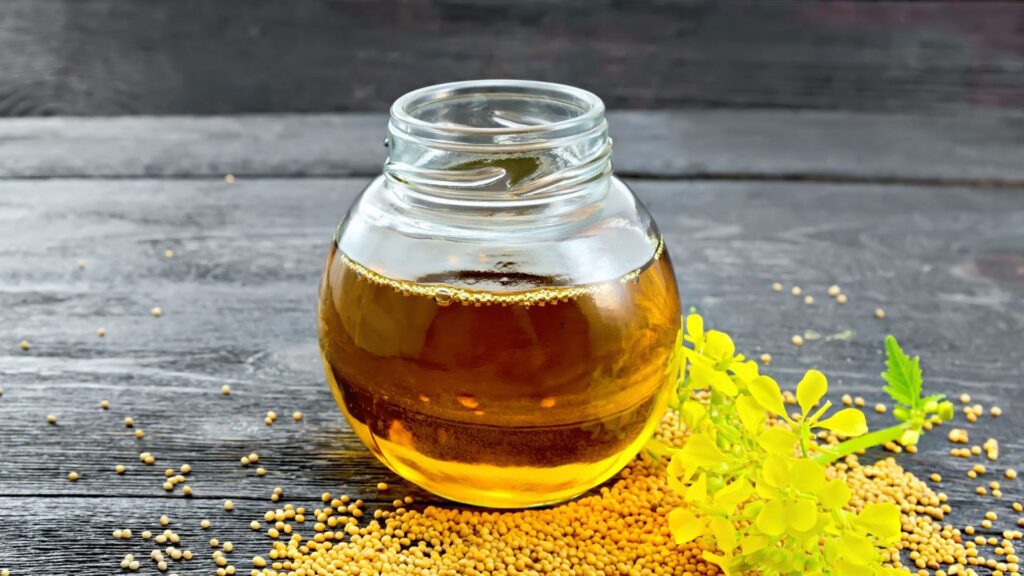
Mustard comes in many forms, but the most debated are mustard seed oil and whole mustard seeds. Each has its distinct benefits, uses, and flavor profile.
This article compares these two staples in terms of health benefits, processing methods, and traditional uses. If you’re trying to choose between them, here’s a clear look at how they differ and which one might suit your needs best.
What Is Mustard Seed Oil?
Mustard seed oil is extracted from mustard seeds using cold pressing or steam distillation. It has a sharp aroma, a strong taste, and a thick texture. People often use it in homemade remedies or as a massage oil. In some countries, it’s also used in food preparation.
Types of Mustard Oil
There are two main types:
- Expressed oil – extracted by pressing, common in cooking across South Asia.
- Essential mustard oil – produced by distillation, mostly used for external applications.
The taste can be intense, but the oil is often valued for its warming sensation and unique properties.
What is Whole Mustard Seeds?

Whole mustard seeds are tiny round seeds that come in yellow, brown, or black varieties. They have a mild flavor when whole but release heat and sharpness when crushed or cooked.
These seeds are often used in pickling, spice blends, or as a seasoning base in heated oil. They’re easy to store, last long, and add texture and bite to meals.
Nutritional Value: Mustard Seed Oil vs Whole Mustard Seeds
Both forms contain nutrients, but how they deliver them differs.
Nutrients in Mustard Seed Oil
Mustard oil is rich in:
- Monounsaturated fats – good for heart health
- Omega-3 fatty acids – helps with inflammation
- Vitamin E – supports skin and immune function
Nutrients in Whole Mustard Seeds
Whole seeds contain:
- Fiber – supports digestion
- Selenium and magnesium – supports metabolism and muscle function
- Glucosinolates – compounds believed to fight cell damage
The body absorbs these better when the seeds are ground or cooked.
Usage in Traditional Practices
Both forms have long-standing roles in cultural practices beyond the kitchen:
Topical Uses of Mustard Oil
In many regions, mustard oil is massaged into the skin to ease joint discomfort or stimulate circulation. It’s also used for scalp treatments to promote hair health. However, raw mustard oil contains erucic acid, which has raised safety questions in some countries.
Whole Seeds in Traditional Health Remedies
Whole seeds have been brewed into teas or ground into pastes for external application. They are believed to help relieve congestion and minor muscle aches. Though less potent than the oil, they offer a gentler alternative for sensitive individuals.
Wrapping Up
Depending on your needs, mustard seed oil and whole mustard seeds offer unique advantages. The oil delivers stronger effects and deeper flavor, but it comes with limitations and health considerations.
Whole seeds, by contrast, offer a milder approach with fewer concerns and more versatility. Choosing between them comes down to personal preference, purpose, and availability.
