
Sushi is often seen as a light and fresh meal, but not all rolls support weight loss goals. Some are packed with sauces, fried toppings, and extra calories that can add up quickly.
This article highlights seven sushi rolls that help you stay on track, plus tips to make better choices when ordering or making your own.
1. Cucumber Roll
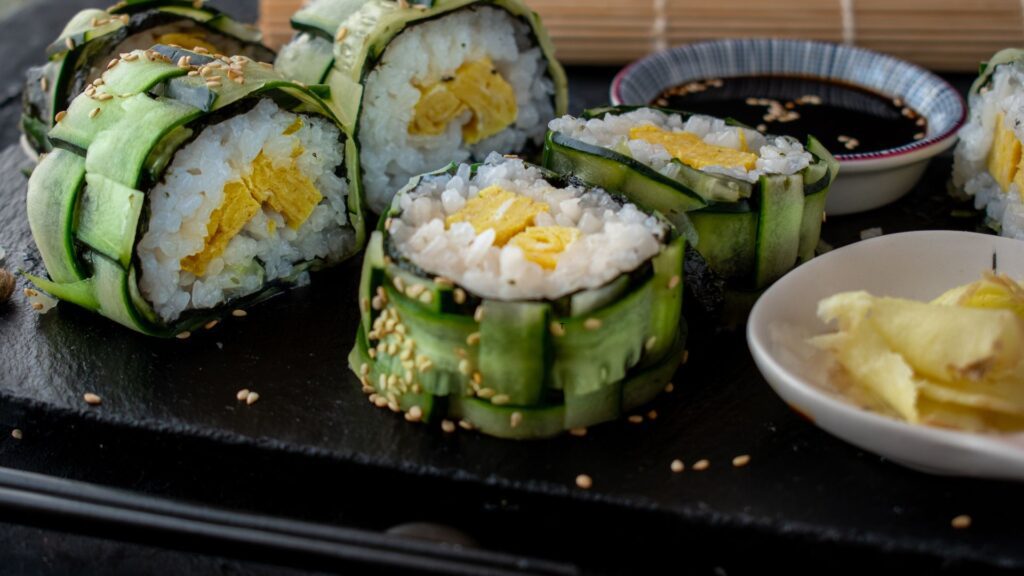
This is one of the leanest sushi rolls you can eat. A standard cucumber roll (kappa maki) contains around 130–140 calories per six-piece serving. It’s made with seasoned rice, cucumber, and seaweed. The crunch is satisfying, and the water content helps with hydration and fullness.
Why it works for weight loss
- Very low in fat
- Keeps you feeling light
- Ideal for pairing with miso soup or a side salad
2. Tuna Roll
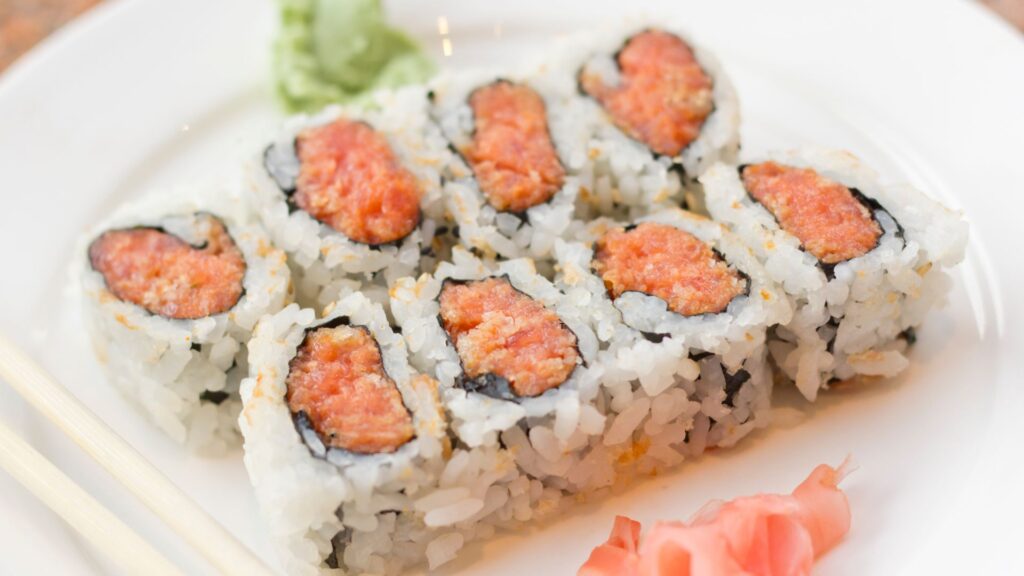
Tuna is a smart pick when you’re aiming for lean protein. A regular tuna roll has about 180–200 calories and delivers roughly 20 grams of protein. It doesn’t come with heavy sauces or deep-fried extras. This makes it a solid go-to for satisfying hunger without going overboard.
Smart additions
- Ask for brown rice for extra fiber
- Pair with edamame to extend satiety
3. Avocado Roll
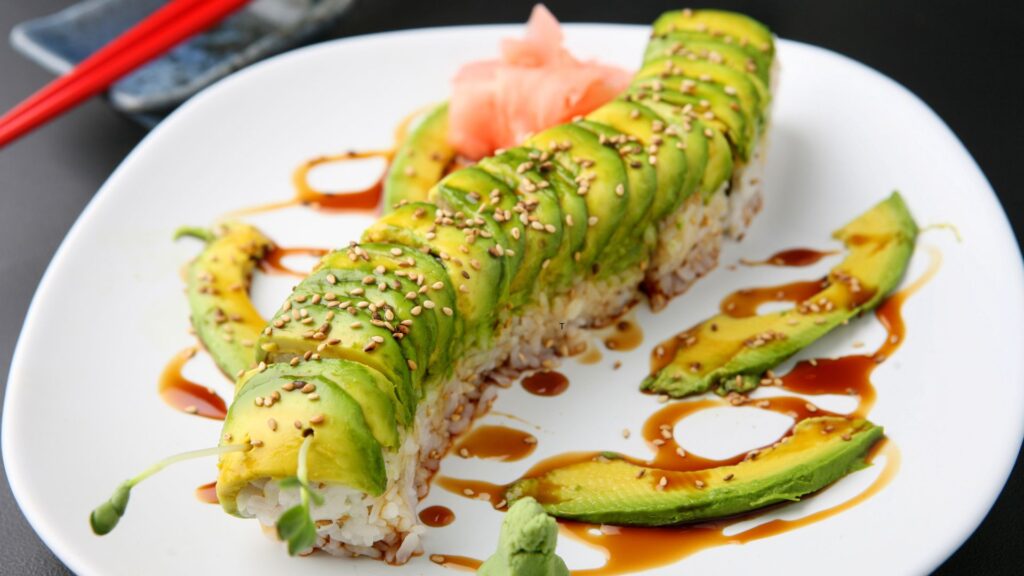
Avocado adds creaminess and heart-healthy fats. At about 140–160 calories per roll, it’s still within a low-calorie range. While avocados contain fats, these are the kind that help regulate hunger and support metabolism. Just avoid pairing with other rich rolls in the same meal.
Keep an eye on
- Added sauces (skip mayo or aioli)
- Serving size. Stick to six pieces
4. Salmon Roll
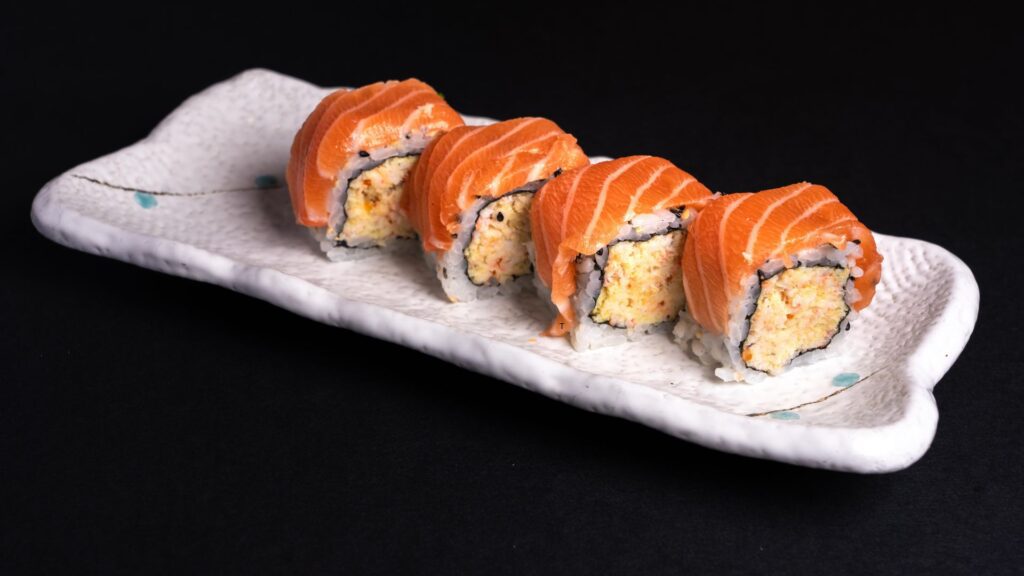
Salmon is rich in omega-3 fatty acids, which support overall health. A salmon roll has around 180–210 calories, mostly from the fish and rice. It’s best when served raw or lightly smoked, without extras like cream cheese or tempura bits.
Ideal for lunch
- Add a side of pickled ginger for digestion
- Choose low-sodium soy sauce if dipping
5. Veggie Roll

Vegetable rolls vary, but most have about 150–170 calories per serving. Common fillings include carrots, cucumbers, spinach, and avocado. They offer fiber, water content, and crunch; all of which help you feel full. They’re also a safe option at most restaurants.
Tip for home prep
- Use less rice and more veggies
- Add pickled radish or sprouts for a flavor boost
6. Yellowtail and Scallion Roll
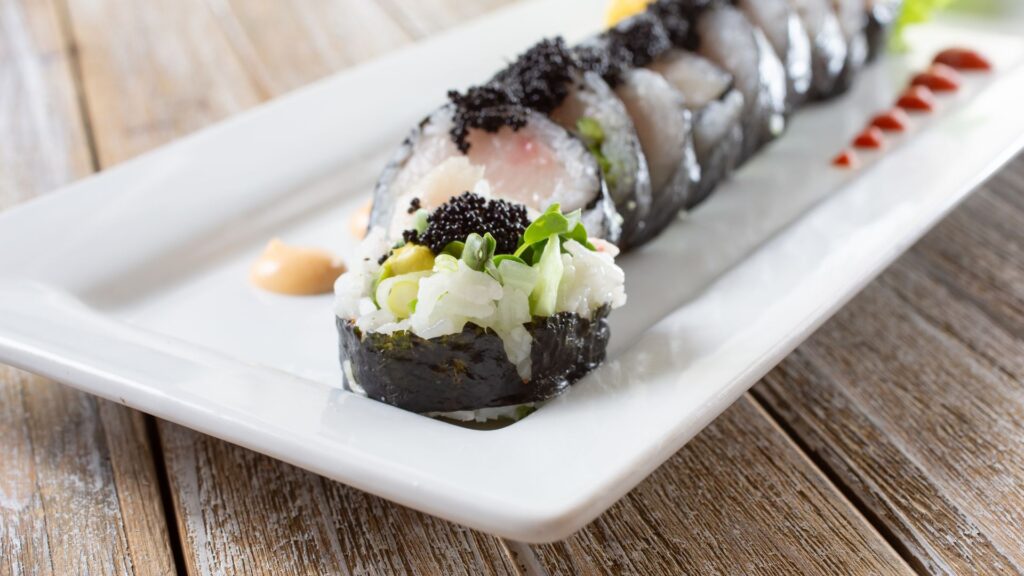
Yellowtail (hamachi) is another lean fish, and scallions bring flavor without calories. This roll averages 170–190 calories. It’s a great choice for people who want to eat light but still enjoy something with a little punch. The combination also works well with wasabi for extra heat.
Watch your sodium
- This roll can be salty; avoid extra soy sauce
- Pair with green tea to balance the meal
7. Shrimp Roll (No Tempura)
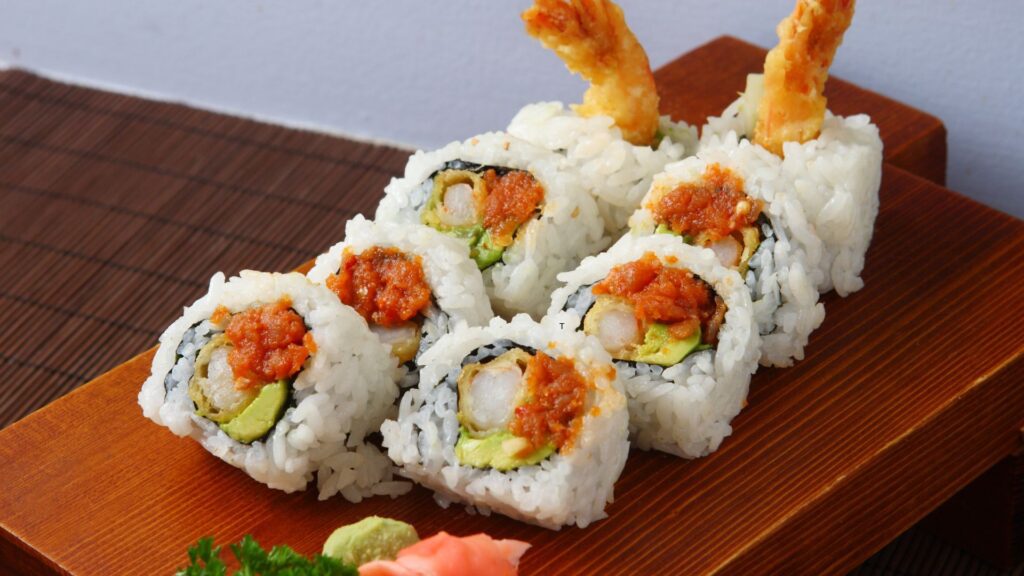
Shrimp is low in fat and high in protein, with just 150–180 calories in a basic roll. Choose one that skips the tempura or spicy mayo. You’ll still get flavor and texture without the added calories. It’s a smart pick when you’re out and want a satisfying, lower-calorie choice.
Avoid these extras
- No creamy sauces
- No crunchy tempura flakes
Wrapping Up
Choosing sushi for weight loss comes down to ingredients and preparation. Rolls with lean protein, fresh vegetables, and minimal sauces are your best bet.
Stay mindful of extras like mayo, tempura, and sugary sauces as they can double the calorie count fast. Additionally, keep your portions reasonable and pair your rolls with water or green tea instead of high-calorie drinks.