
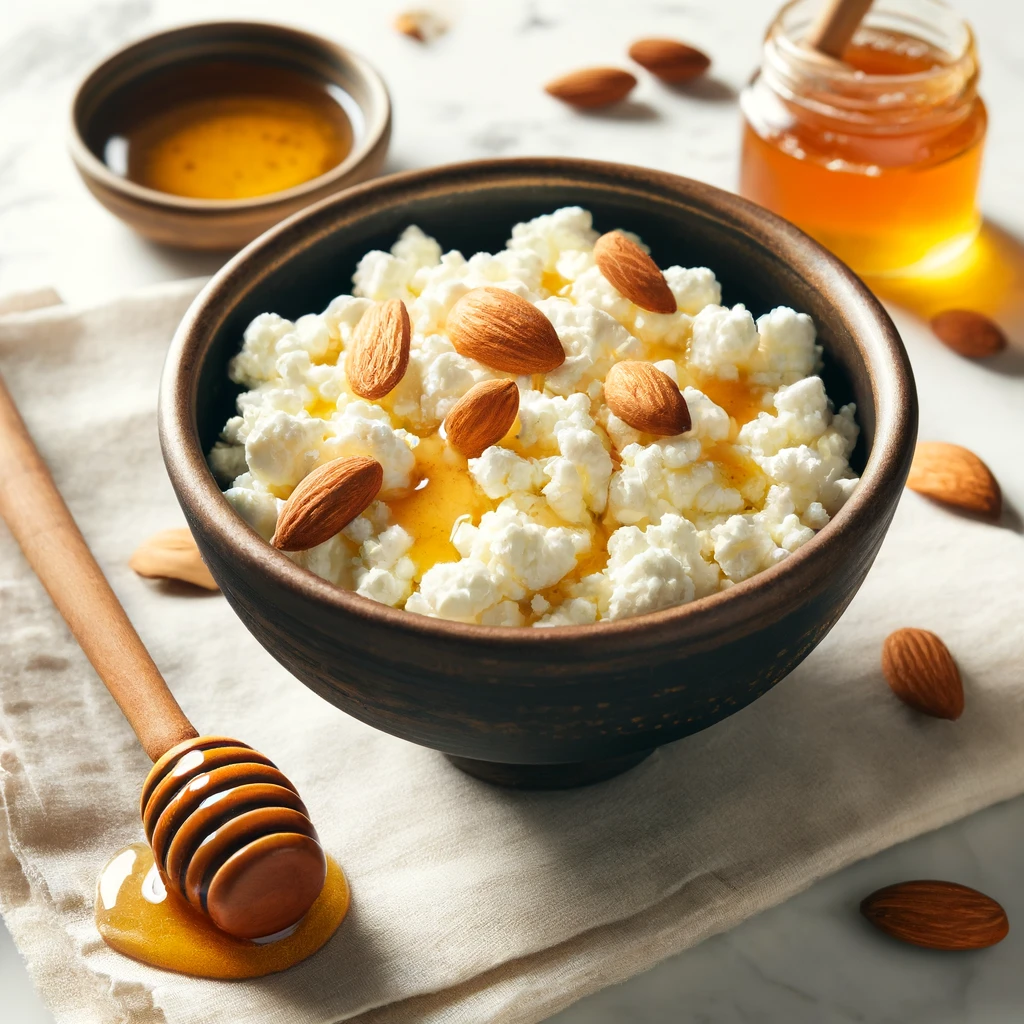
Cottage cheese is without doubt one of the healthiest cheeses available. But what exactly is cottage cheese and how is it made?
If you’ve ever wondered about this question, you’ve come to the right place.
This post explores everything you need to know about cottage cheese; its production process, nutritional profile, and recipes. Let’s begin.
Table of Contents
ToggleWhat is cottage cheese?
Cottage cheese is a fresh cheese derived from curds. It was traditionally made in cottages from leftover milk after butter production, hence the name ‘cottage cheese’.
Unlike blue cheeses, cottage cheese is not pressed or aged, which gives it a soft and creamy texture. It’s often eaten plain or with fruit and is known for its high protein content and low fat.
How is it made?
Cottage cheese is made by curdling milk using an acid like vinegar or lemon juice, or a bacterial culture. Here’s a step-by-step guide on how cottage cheese is prepared:
- Pasteurization: Initially, the milk is warmed to kill any harmful bacteria. Usually, cow’s milk is used, but other types of milk, such as goat or sheep, can also be employed.
- Adding starter culture and rennet: Next, bacteria cultures are added to initiate fermentation and help curdle the milk. Rennet is also added to aid coagulation.
- Curd formation: As the milk coagulates, it separates into curds and whey. This process can take several hours depending on the temperature and culture used.
- Cutting the curds: Once the curds are formed, they are cut into smaller pieces to release more whey. Smaller curds will produce a creamier texture while larger curds will be chunkier.
- Cooking and stirring: The curds are gently cooked and stored to further separate the whey. This step is done at a controlled temperature to prevent the curds from becoming too tough.
- Draining the whey: After cooking, the curds are drained to remove the excess whey. This can be done using a cheesecloth or through mechanical means in commercial production.
- Rinsing and cooling: The curds are then rinsed with cold water to remove any remaining whey and to cool them down. This step helps in achieving the desired texture and taste.
- Adding cream and salt: Finally, cream and salt are mixed into the curds to add flavor and richness. The amount of cream added can vary, resulting in different fat content levels, such as full-fat, low-fat, or fat-free cottage cheese.
Nutritional profile of cottage cheese
Cottage cheese is a nutrient-dense food, packed with essential vitamins and minerals. Here is a breakdown of its nutritional value per 100 grams serving of low-fat (2%) cottage cheese:
- Calories: 84
- Protein: 11 grams
- Fat: 2.3 grams
- Saturated Fat: 1.0 gram
- Polyunsaturated Fat: 0.1 gram
- Monounsaturated Fat: 0.6 grams
- Carbohydrates: 4.3 grams
- Sugars: 4.1 grams
- Fiber: 0 grams
- Cholesterol: 15 milligrams
- Sodium: 321 milligrams
- Potassium: 104 milligrams
- Calcium: 83 milligrams
What does cottage cheese taste like?
Generally, cottage cheese has a mild, slightly tangy, and creamy taste. The tanginess comes from the lactic acid produced during the fermentation process, while the creaminess is due to the added cream that blends with the curds.
How to eat cottage cheese
Cottage cheese can be enjoyed in several ways. One of the simplest is in a breakfast bowl.
Start with a base of cottage cheese, top it with fresh berries, and drizzle with honey. Then sprinkle granola on top for added crunch. Below are other delicious cottage cheese recipes you could try:
Cottage cheese pancakes
Cottage cheese pancakes are a fluffy and protein-packed alternative to traditional pancakes. To make them:
- Mix the cottage cheese, eggs, flour, baking powder, salt, and sugar until well combined.
- Heat a non-stick skillet over medium heat and add a small amount of butter or oil.
- Pour small amounts of batter onto the skillet to form pancakes.
- Cook until bubbles form on the surface, then flip and cook until golden brown.
- Serve with fresh fruit, syrup, or a dollop of yogurt.
Stuffed peppers
Cottage cheese can be used as a stuffing for bell peppers:
- Preheat your oven to 375°F (190°C).
- Cut the tops off the bell peppers and remove the seeds.
- In a bowl, mix cottage cheese, quinoa or rice, spinach, grated cheese, garlic powder, salt, and pepper.
- Stuff the peppers with the mixture and place them in a baking dish.
- Cover with foil and bake for 30 minutes. Remove the foil and bake for an additional 10-15 minutes, until the peppers are tender and the cheese is melted and bubbly.
- Serve warm.
Cottage cheese cheesecake
Cottage cheese can also be used to make a lighter version of cheesecake.
- Preheat your oven to 350°F (175°C).
- In a food processor, blend the cottage cheese until smooth.
- Add the Greek yogurt, sugar, eggs, vanilla extract, and lemon juice. Blend until well combined.
- In a separate bowl, mix the graham cracker crumbs and melted butter. Press the mixture into the bottom of a springform pan to form the crust.
- Pour the cottage cheese mixture over the crust and smooth the top.
- Bake for 45-50 minutes, or until the cheesecake is set and the edges are golden.
- Let it cool completely before serving. You can top it with fresh berries or a fruit compote.
Wrapping up
Cottage cheese is a slightly tangy cheese produced from curds. It comes in several varieties including non-fat, low-fat, and full-fat, large curds and small curds versions.
Renowned for its high protein content and low calories, cottage cheese is a delicious inclusion for many diet styles.