

Brie and Camembert cheese share a lot of similarities. At first glance, you might be tempted to think they are the same. So, what’s the difference between brie vs camembert cheese?
In this article, you’ll discover what sets camembert and brie apart, from their textures and flavors to how they’re made.
Plus we’ll cover some recipe ideas to highlight where they fit in the most. Let’s get into it!
What is brie cheese?
Brie cheese is a soft, creamy cheese originating from Brie in northern France. It became known as the “Queen of Cheeses” after a notable competition at the Congress of Vienna in 1815, where its taste and quality were celebrated.
While traditionally made in Brie, today’s Brie cheese is also widely produced internationally, though the French varieties are often still considered the gold standard.
- Also read about Parmesan Cheese (King of Cheese)
What is camembert cheese?
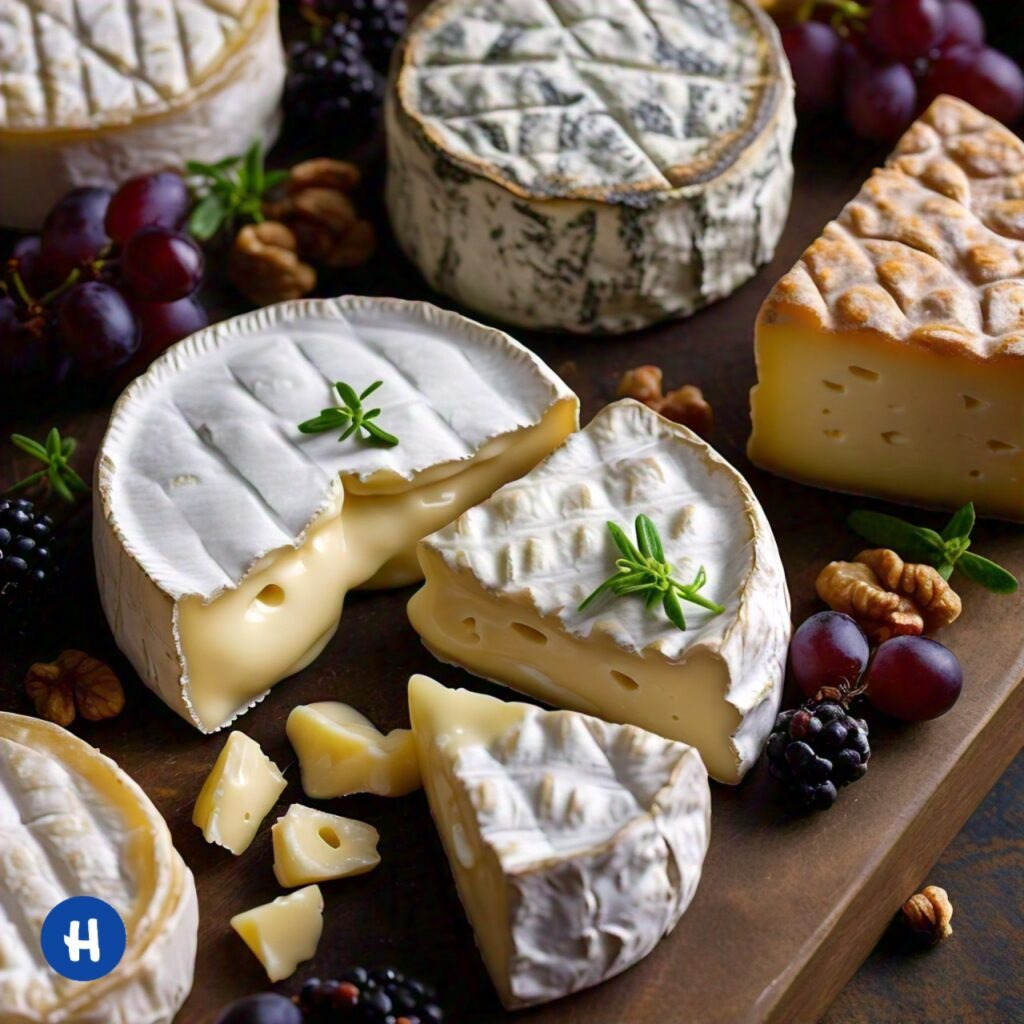
Camembert is also a French cheese known for its robust, earthy flavor. Camembert’s story began in Normandy, France, during the late 18th century.
Legend has it that Marie Harel, a dairy farmer, created Camembert after receiving cheesemaking tips from a priest who had fled the Brie region during the French Revolution.
Over time, Camembert gained popularity throughout France and the world.
Brie vs. Camembert cheese: What’s the difference?
Brie and camembert differ in preparation, aging, and flavor, amongst several things:
Brie cheese vs. Camembert: Nutritional difference
Generally, camembert tends to be slightly lower in calories and fat, with higher calcium and sodium levels:
| Brie Cheese (per 1 oz/28g) | Camembert Cheese (per 1 oz/28g) | |
| Calories | ~95 kcal | ~85 kcal |
| Protein | 5-6 g | 5-6 g |
| Total Fat | 8 g | 7 g |
| Saturated Fat | 5 g | 4 g |
| Cholesterol | 28 mg | 20 mg |
| Calcium | 52 mg | 110 mg |
| Sodium | 178 mg | 200 mg |
| Vitamin A | 6% of Daily Value (DV) | 6% of DV |
| Vitamin B12 | 8% of DV | 10% of DV |
| Phosphorus | 7% of DV | 8% of DV |
Note that these values vary slightly based on the specific brand and whether the cheese is made from raw or pasteurized milk.
Camembert vs. Brie: Milk Preparation
Another difference is the way the curds are cut during the cheesemaking process. While they both include cow’s milk and Penicillium Candidum mold, Brie curds are cut into larger pieces, which allows the cheese to retain more moisture.
Camembert curds, however, are cut into smaller pieces, which leads to more moisture loss and a firmer, denser texture. The smaller curds also contribute to Camembert’s more concentrated, intense flavor.
Camembert vs. Brie cheese: Aging process
Brie and Camembert are ripened from the outside in, but they mature differently. Brie is usually aged for a shorter period, around 4-6 weeks, whereas Camembert is often aged longer, typically 6-8 weeks.
The longer aging of Camembert gives it a more pronounced flavor and a slightly denser texture.
Brie vs. Camembert cheese: Salt content
There is also a difference in salt content. Brie generally has a lower salt composition, contributing to its mild, buttery flavor. Camembert, however, is typically saltier, giving it a more robust, savory flavor that complements its earthiness.
Brie Vs camembert cheese: flavor and texture
While both cheeses are soft, Brie has a slightly creamier texture due to its higher fat content, which gives it a more luxurious mouthfeel. Camembert, on the other hand, is typically a bit firmer but still smooth, especially as it ages.
In terms of flavor, Brie is mild and buttery, with subtle earthy notes that appeal to a wide audience. In contrast, Camembert offers a stronger, more complex taste with deeper, mushroom-like undertones.
This earthy flavor intensifies as the cheese ages, making it a favorite for those who enjoy robust flavors.
Brie Vs. Camembert cheese in dishes
Brie is better suited for recipes and dishes where a creamier, subtler flavor is desired. It pairs well with fruits like apples, grapes, and figs and complements white wines such as Chardonnay or Sauvignon Blanc.
Brie’s ability to melt easily makes it perfect for sandwiches, baked dishes, and even as a topping on pizza.
Camembert, due to its bolder flavor, is often enjoyed on its own or with milder accompaniments. It pairs well with a stronger red wine like Pinot Noir or Merlot.
Camembert can also be baked, served with crusty bread, or accompanied by herbs to enhance its robust flavor.
Baked Camembert recipe
One of the simplest and most popular ways to enjoy Camembert is to bake it. This creates a gooey, indulgent dish that’s perfect for dipping bread or vegetables. Here’s how to prepare it:
Ingredients
- 1 whole wheel of Camembert cheese (about 250g), in its box or wrapped in foil
- 1-2 cloves of garlic, thinly sliced
- 1-2 sprigs of fresh rosemary or thyme
- 1-2 tablespoons of honey or olive oil (optional for added flavor)
- Freshly ground black pepper
- Crusty bread, crackers, or vegetable sticks for serving
Instructions
- Preheat the oven: Preheat your oven to 350°F (175°C).
- Prepare the Camembert: Remove any plastic packaging from the Camembert. If it comes in a wooden box, place the cheese back in the box after removing the wrapper. If you don’t have the box, wrap the cheese in foil and place it in an oven-safe dish.
- Score the top: Using a sharp knife, make a few small cuts on the top rind of the cheese. This helps the garlic and herbs infuse the cheese and allows the cheese to bubble up while baking.
- Add garlic and herbs: Insert thin slices of garlic and small sprigs of rosemary or thyme into the slits. For extra flavor, drizzle a small amount of honey or olive oil over the top, and sprinkle with freshly ground black pepper.
- Bake the cheese: Place the Camembert in the oven and bake for 10-15 minutes. The cheese should be gooey and soft but not fully melted or collapsing.
- Serve and enjoy: Remove from the oven and serve immediately with crusty bread, crackers, or vegetables for dipping.
Recipe ideas using brie cheese
Brie can be used as a main ingredient or as an accent flavor in appetizers, flatbreads, and casseroles. Here are some ideas to begin with:
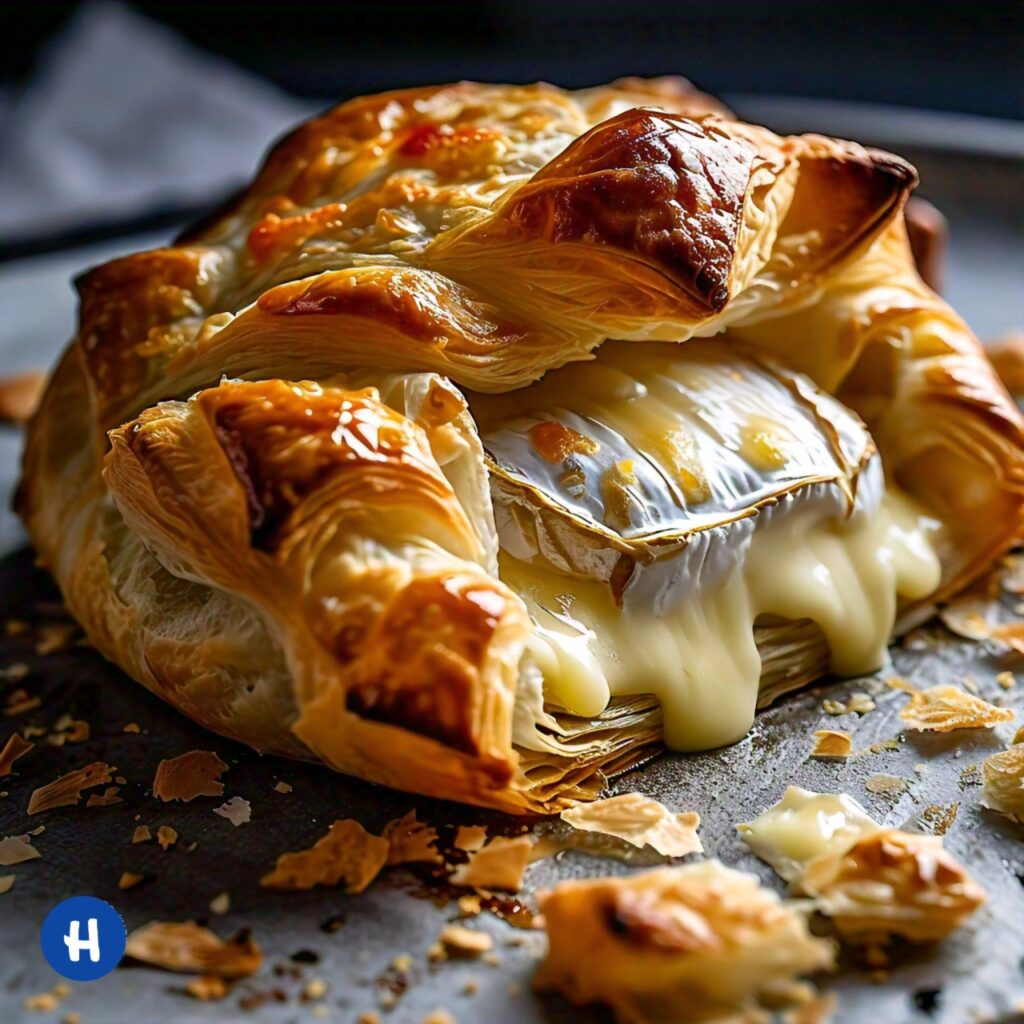
1. Baked Brie en Croûte (Brie wrapped in puff pastry)
Ingredients
- 1 round of Brie cheese (about 250g or 8 oz)
- Puff pastry (store-bought or homemade)
- 2-3 tablespoons of fruit preserves (apricot, raspberry, or fig)
- 1 egg (for egg wash)
- Optional toppings: nuts (such as almonds or pecans), honey, or herbs
Instructions
- Preheat the oven: Preheat to 375°F (190°C).
- Prepare the Brie: Place the Brie wheel on the puff pastry sheet. Spread a layer of fruit preserves over the top, then sprinkle with nuts if desired.
- Wrap the Brie: Fold the pastry over the Brie, sealing it at the top. Brush with egg wash for a golden finish.
- Bake: Place on a baking sheet and bake for 20-25 minutes or until the pastry is golden brown. Let it cool a little before serving with crackers or baguette slices.
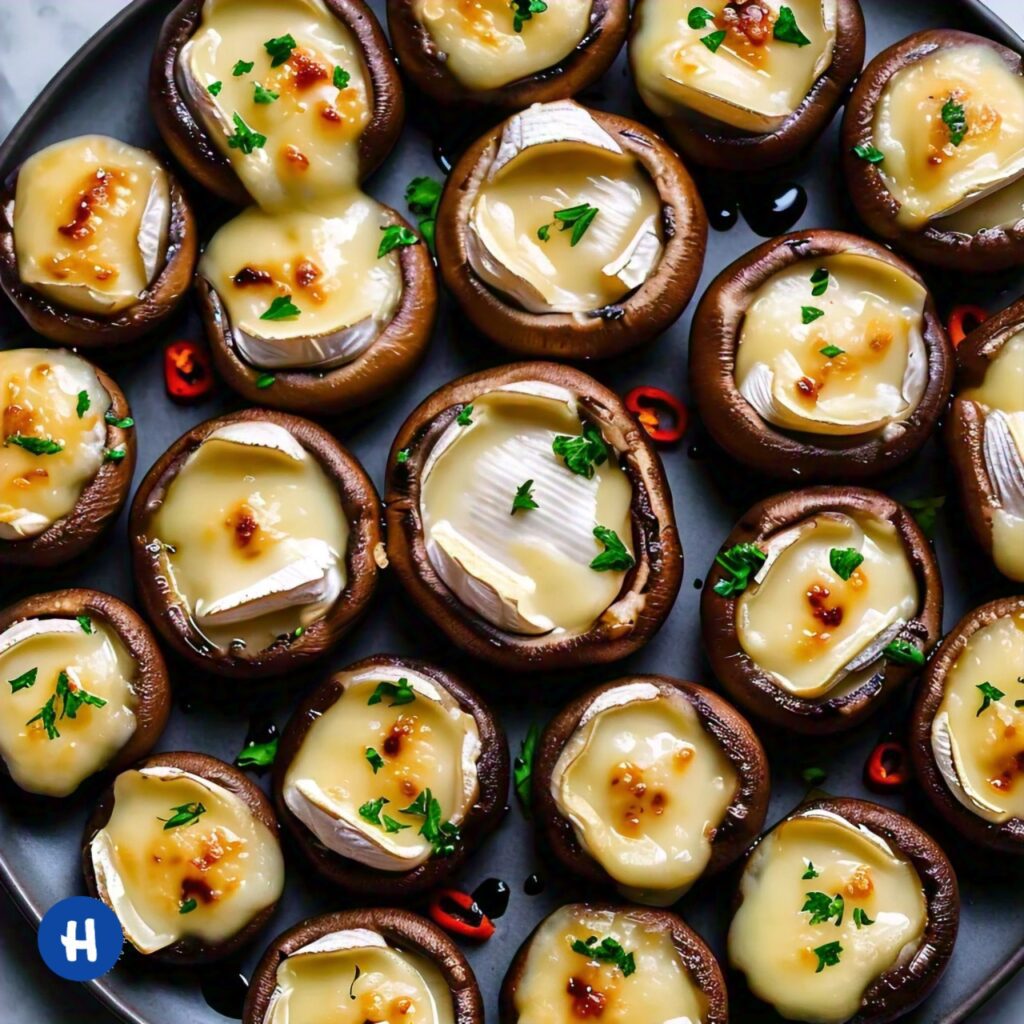
2. Brie-stuffed mushrooms
Ingredients
- Large button or portobello mushrooms
- Brie cheese, cut into small cubes
- Fresh herbs (thyme or rosemary), chopped
- Olive oil, salt, and pepper
Instructions:
- Preheat oven: Set to 375°F (190°C).
- Prepare mushrooms: Clean mushrooms and remove stems. Place a small cube of Brie in each mushroom cap.
- Add toppings: Drizzle with olive oil, sprinkle with herbs, salt, and pepper.
- Bake: Bake for 15-20 minutes, until mushrooms are tender and the cheese is bubbly. These make excellent appetizers!
3. Creamy baked Brie pasta

Ingredients
- 8 oz pasta (penne or rigatoni)
- 4 oz Brie cheese, rind removed and cut into small chunks
- 1/2 cup heavy cream or milk
- 1/4 cup Parmesan cheese, grated
- Salt, pepper, and garlic powder
- Optional: fresh basil or cherry tomatoes for garnish
Instructions:
- Cook pasta: Cook pasta according to package instructions.
- Prepare sauce: In a baking dish, mix the cooked pasta with Brie, cream, and Parmesan. Season with salt, pepper, and garlic powder.
- Bake: Bake at 350°F (175°C) for 15-20 minutes until the cheese is melted and bubbly.
- Garnish: Add fresh basil or cherry tomatoes for a pop of color and freshness.
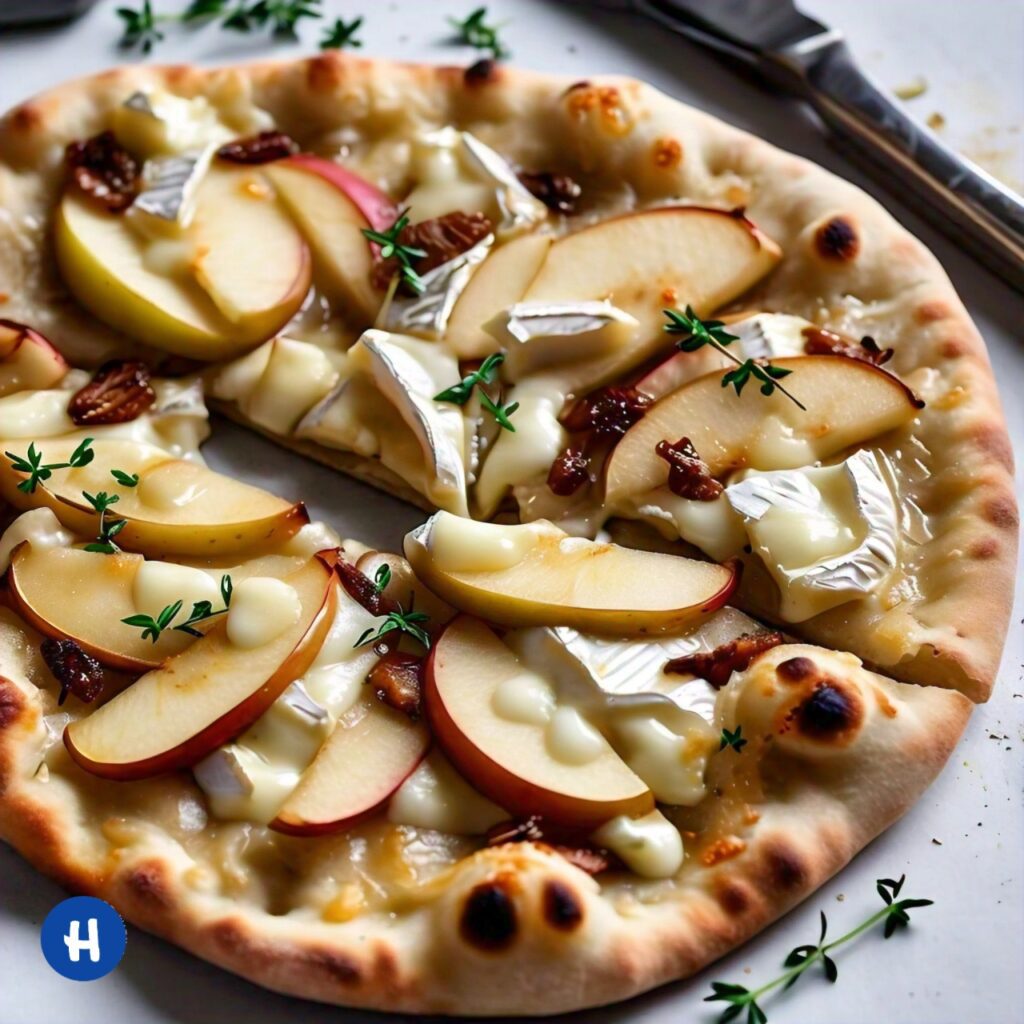
4. Brie and apple flatbread
Ingredients
- Flatbread or pizza crust
- Brie cheese, thinly sliced
- 1 apple, thinly sliced
- Honey or balsamic glaze
- Fresh arugula for garnish
Instructions
- Preheat Oven: Set to 400°F (200°C).
- Assemble Flatbread: Lay Brie slices over the flatbread, followed by apple slices.
- Bake: Bake for 8-10 minutes until the cheese melts and the crust is golden.
- Finish: Drizzle with honey or balsamic glaze, and top with fresh arugula before serving.
Frequently Asked Questions
Which cheese is healthier: Brie or Camembert?
Both are nutritionally, containing healthy fats, protein, and calcium. Camembert is slightly lower in fat and calories per ounce but often has higher sodium. Choosing between them comes down to personal taste preference and dietary needs.
- Also read: How to Freeze Ricotta Cheese
Can I substitute Brie for Camembert in recipes (or vice versa)?
Yes, they can be used interchangeably in most recipes, especially when baking or making cheese boards. Brie’s milder flavor may pair better with delicate ingredients, while Camembert’s stronger taste complements robust flavors like mushrooms and truffle.
Can you eat the skin of Camembert?
Yes, the rind on both cheeses is edible. It’s a soft, white rind created by mold that contributes to each cheese’s unique flavor profile. The rind on Brie is typically thicker and milder, while Camembert is thinner with a bolder flavor.
Does Camembert taste bitter?
Camembert can develop a slightly stronger, earthy, or mildly bitter flavor, especially as it ages. This taste comes from the breakdown of proteins and fats in the cheese, which intensifies as it ripens.
Does Camembert melt better than Brie?
Yes, Camembert typically melts slightly better than Brie due to its smaller size and denser texture. When baked, Camembert’s interior becomes gooey and smooth, making it ideal for dishes like Baked Camembert or as a dipping cheese.
Conclusion
Brie and Camembert share similarities as creamy, soft cheeses with edible rinds, but they differ in flavor and texture. Brie is known for its mild, buttery taste and creamier texture, often enjoyed on cheese boards or paired with fruits and nuts.
Camembert, with its smaller size and denser consistency, has a stronger, earthier flavor and melts exceptionally well, making it ideal for baking and cooking.
Choosing between the two depends on personal preference and how each cheese complements specific dishes.