
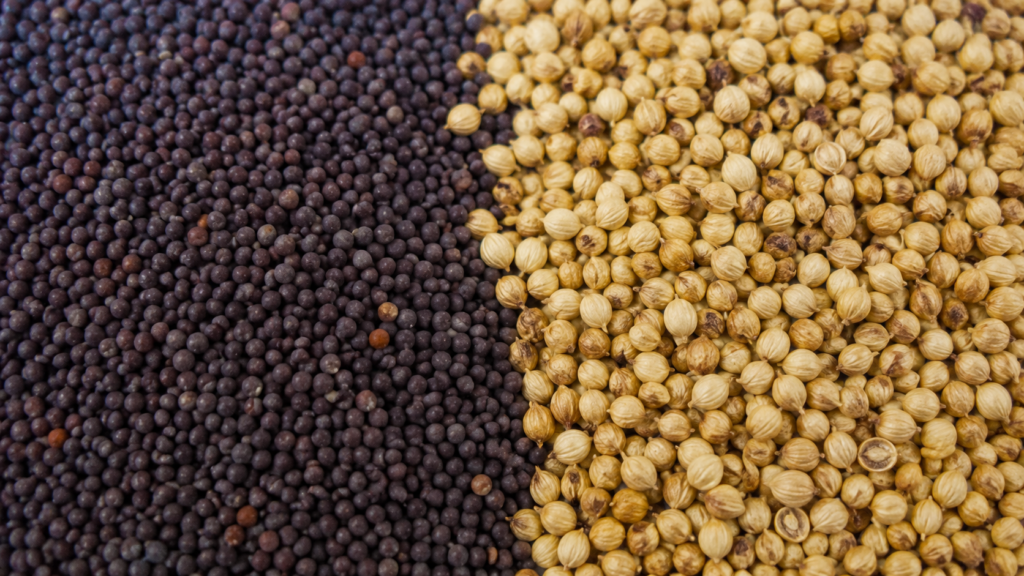
Mustard seeds and coriander are among the most powerful and versatile ingredients you can add to your kitchen. They carry real nutritional value, support several body systems, and are flexible enough to work in everything from a Sunday roast to a simple weeknight soup.
This guide covers everything you need to know about mustard seeds and coriander, including their health benefits, how to cook with them the right way, how to store them, and how to choose between them.
What are Mustard and Coriander Spices?
Before getting into health benefits and cooking techniques, it helps to know what you’re working with. Both mustard seeds and coriander seeds are whole spices, meaning they come from plants and are used either whole or ground depending on the dish.
Mustard Seeds
Mustard seeds come from the mustard plant, which belongs to the Brassica family alongside cabbage and broccoli. There are three main varieties: yellow, brown, and black. Yellow mustard seeds are the mildest and most common in American kitchens.
Brown mustard seeds carry more heat and are used widely in Indian cooking. Black mustard seeds are the most pungent and are popular in South Asian and African cuisines. All three are edible whole or ground.
Coriander Seeds
Coriander seeds come from the coriander plant, which is also the source of the fresh herb known as cilantro. This is where many American home cooks get confused: coriander seeds and cilantro leaves come from the same plant but taste completely different.
Coriander seeds have a warm, citrusy, slightly nutty flavor. Cilantro leaves taste bright, herbal, and sometimes soapy to people with a specific genetic sensitivity. The two are not interchangeable in recipes.
| Feature | Mustard Seeds | Coriander Seeds |
|---|---|---|
| Flavor Profile | Sharp, pungent, slightly bitter | Warm, citrusy, mildly nutty |
| Heat Level | Mild to hot depending on variety | No heat, gentle warmth |
| Best Form | Whole or ground | Whole, crushed, or ground |
| Common Use | Pickles, dressings, curries | Spice blends, soups, rubs |
| Origin | Mediterranean and South Asia | Middle East and South Asia |
What Mustard Seeds and Coriander Actually Contain
Health benefits always start with nutrients. Both of these spices are small but surprisingly dense in compounds that support the body.
| Nutrient | Mustard Seeds (1 tsp) | Coriander Seeds (1 tsp) |
|---|---|---|
| Calories | ~10 | ~5 |
| Key Minerals | Selenium, Magnesium | Iron, Manganese |
| Key Fatty Acids | Omega-3 | Minimal |
| Antioxidants | Glucosinolates | Linalool, Flavonoids |
| Fiber | Moderate | Moderate to High |
A Realistic Note on Serving Size: Most people use these spices in amounts of half a teaspoon to one teaspoon per meal. The nutritional benefits are real, but they accumulate over consistent use rather than from a single dish. Think of these spices as daily contributors to your overall diet, not quick fixes.
Why Mustard Seeds Deserve a Place in Your Spice Rack

Mustard seeds have been used as a medicinal food in many traditions, and modern research is beginning to support several of those traditional claims.
Anti-Inflammatory Properties
Glucosinolates in mustard seeds break down into compounds called isothiocyanates when the seeds are crushed or chewed. These compounds have been studied for their ability to reduce markers of inflammation in the body. Chronic low-level inflammation is linked to conditions including heart disease and type 2 diabetes, making anti-inflammatory foods a practical part of a healthy diet.
Digestive Support
Mustard seeds have long been used to stimulate the production of digestive enzymes. This can help the stomach break down food more efficiently and may reduce common complaints like bloating and sluggish digestion after heavy meals. The fiber content in whole seeds also adds gentle bulk that supports regular bowel movements.
Cardiovascular Benefits
The omega-3 fatty acids in mustard seeds support healthy cholesterol levels and may help reduce triglycerides when consumed as part of a balanced diet. While mustard seeds alone will not reverse heart disease, they are a worthwhile addition to a diet already focused on heart health.
Blood Sugar Regulation
Early research suggests that certain compounds in mustard seeds may support insulin sensitivity. The evidence is still emerging and not yet strong enough to make clinical recommendations, but the findings are promising enough to include mustard seeds as a component of a blood-sugar-conscious diet.
Antioxidant Activity
Selenium and glucosinolates both contribute antioxidant activity, which means they help protect cells from damage caused by free radicals. Over time, this kind of cellular protection is associated with reduced risk of several chronic diseases.
Cooking Tip: Black mustard seeds popped in hot oil release significantly more of their active compounds than seeds eaten raw or simply sprinkled cold onto food. Heating activates the enzymatic breakdown that unlocks their full nutritional potential.
Safety Note: People with thyroid conditions should be aware that very large amounts of mustard seeds may affect thyroid function due to compounds called goitrogens. In typical culinary amounts this is not a concern, but anyone on thyroid medication should check with their doctor before increasing intake significantly. People on blood thinners should also consult a doctor.
The Underrated Health Benefits of Coriander Seeds

Coriander seeds tend to get overlooked in American kitchens, often overshadowed by their more famous relative, cilantro. That is a missed opportunity because the seeds carry a distinct set of benefits worth knowing.
Digestive Health
Coriander has been used for centuries to calm digestive discomfort. Modern research supports traditional uses, showing that coriander seed extracts can help reduce bloating, gas, and spasms in the digestive tract. Some studies suggest it may be helpful for people with irritable bowel syndrome, though more clinical trials are needed.
Anti-Inflammatory and Antioxidant Effects
The linalool in coriander seeds is a natural compound also found in lavender, and it has demonstrated anti-inflammatory effects in laboratory studies. The flavonoids present in the seeds work alongside linalool to reduce oxidative stress, which is one of the underlying drivers of aging and chronic disease.
Blood Sugar Management
Several studies have found that coriander seed extract can help lower blood sugar in people with elevated glucose levels. It appears to stimulate insulin secretion and improve how cells absorb glucose. While this research is still developing, it supports the long-standing traditional use of coriander as a blood sugar aid in Ayurvedic medicine.
Antimicrobial Properties
Coriander oil and seed extracts have shown the ability to inhibit certain bacteria, including some strains that are resistant to common antibiotics. When used in cooking, coriander may offer modest food safety benefits by slowing bacterial growth in prepared dishes.
Anxiety and Sleep Support
Some preliminary animal studies suggest that linalool in coriander may produce mild calming effects on the nervous system. Traditional medicine has used coriander tea as a sleep aid for centuries. The human evidence is limited, and coriander seeds should not replace medical treatment for anxiety or sleep disorders, but the traditional use has biological plausibility.
Bioavailability Tip: Lightly crush or grind coriander seeds before adding them to a dish. The whole seeds have a hard outer shell that limits how much of the active compounds your body absorbs. Cracking them open, even roughly, makes a meaningful difference.
Safety Note: Coriander belongs to the Apiaceae plant family, which also includes celery, parsley, and fennel. People with allergies to any of these plants should use coriander with caution. Coriander also has mild blood-thinning properties, so anyone on anticoagulant medication should discuss increased intake with their doctor.
Simple Ways to Use Mustard Seeds in Your Everyday Cooking
Knowing the benefits of a spice is only useful if you actually cook with it. Mustard seeds are more versatile than most people realize.
The Blooming Technique
The most effective way to use mustard seeds is to bloom them in oil. Heat a small amount of oil in a pan over medium heat, add the whole seeds, and wait. Within about 30 to 60 seconds, the seeds will begin to pop and sizzle. That popping sound is the signal that their flavor and active compounds have been fully released. Pour this seasoned oil directly over cooked vegetables, lentils, rice, or use it as the base for a larger dish.
Four Easy Ways to Use Mustard Seeds at Home
- Honey mustard roasted carrots: Toss whole carrots with olive oil, whole yellow mustard seeds, honey, and a pinch of salt. Roast at 400 degrees Fahrenheit until caramelized. The seeds add texture and a mild pop of flavor.
- Mustard seed potato salad: Replace standard mustard with whole mustard seeds bloomed in a little oil, then fold into boiled potatoes with vinegar, celery, and herbs. The texture is completely different from the usual version.
- Spiced lentil soup: Bloom black or brown mustard seeds in oil with garlic and cumin, then add red lentils, vegetable broth, and tomatoes. Simmer until thick. This is a weeknight staple that costs very little and delivers a lot.
- Quick pickles: Add yellow mustard seeds to your brine when pickling cucumbers, onions, or green beans. They add subtle heat and a pleasantly firm texture to the finished pickle.
Choosing the Right Variety: Yellow seeds are mild and work well for beginners. Brown seeds have more heat and pair well with strong flavors like red meat and root vegetables. Black seeds are the most intense and are best used in small amounts in dishes with bold seasoning already present.
How to Get the Most Flavor and Nutrition From Coriander Seeds
Coriander seeds reward a little extra attention. The difference between stale ground coriander from a jar and freshly toasted and ground whole seeds is dramatic enough that it can change the character of an entire dish.
How to Toast Coriander Seeds
Place whole coriander seeds in a dry skillet over medium-low heat. Stir or shake the pan constantly for two to three minutes until the seeds darken slightly and release a warm, citrusy aroma. Remove them immediately and let them cool before grinding. Toasting develops volatile oils in the seed that have not yet been activated, and these are the compounds responsible for both the depth of flavor and many of the health benefits.
Grinding Methods
A mortar and pestle gives you control over the coarseness of the grind and is the traditional method. A spice grinder or clean coffee grinder gives a finer, more consistent powder in seconds. For most American kitchens, a small spice grinder is the most practical choice. Grind only what you need for the dish rather than storing pre-ground coriander for weeks, since ground spice loses potency quickly.
Five Ways to Cook With Coriander Seeds
- Spiced rice: Add a teaspoon of toasted, lightly crushed coriander seeds to the pot when cooking rice along with a bay leaf and a little butter. The result is fragrant and more complex than plain rice.
- Dry rub for chicken or lamb: Mix ground toasted coriander with garlic powder, smoked paprika, salt, and black pepper. Pat onto meat before roasting or grilling. Coriander is the backbone of many great spice rubs.
- Homemade curry blend: Coriander seeds are a foundational ingredient in most curry powder blends. Toast and grind them yourself and combine with turmeric, cumin, and chili for a fresh, custom blend that outperforms anything from a jar.
- Soups and stews: Add whole coriander seeds early in the cooking process, or add freshly ground coriander in the last 10 minutes. Both approaches work, with whole seeds providing background warmth and ground seeds adding a brighter, more forward flavor.
- Roasted vegetables: Toss sweet potatoes, beets, or cauliflower with olive oil, lightly crushed coriander seeds, and a squeeze of lemon juice before roasting. The citrus note in coriander pairs naturally with caramelized vegetables.
Flavor Pairing Guide: Coriander seeds pair especially well with cumin, turmeric, garlic, ginger, citrus, and black pepper. These combinations form the base of spice traditions across South Asia, North Africa, and the Middle East.
Mustard Seeds or Coriander Seeds: Which One Should You Reach For
These two spices are used together so often in global cooking that comparing them can feel odd. But there are times when you need to choose, substitute, or simply understand which one a recipe is really asking you to reach for.
| Category | Mustard Seeds | Coriander Seeds |
|---|---|---|
| Flavor Intensity | Bold, sharp, can dominate | Gentle, warm, blends easily |
| Best Cooking Method | Bloom in hot oil | Toast dry, then grind |
| Primary Health Strength | Anti-inflammatory, digestion | Blood sugar, gut calm |
| Best Cuisines | Indian, American, European | Middle Eastern, South Asian, North African |
| Substitution Flexibility | Limited (very distinct flavor) | More flexible in spice blends |
| Used Together In | Garam masala, pickling spice, curry blends | Garam masala, pickling spice, curry blends |
If a recipe calls for coriander and you only have mustard seeds, the substitution will work in some dishes but will change the flavor significantly. Mustard seeds are sharper and more pungent, so reduce the amount if you make that swap. The reverse swap works better in dishes with bold seasoning already present, like stews or braises, where the mustard flavor is less likely to stand out awkwardly.
The best approach is to keep both in your pantry. They are inexpensive, shelf-stable, and frequently used together in some of the most popular spice blends in global cooking.
How to Store Mustard Seeds and Coriander to Keep Their Potency
Buying the right spices matters less than you might think if you store them incorrectly. Both mustard seeds and coriander seeds lose their active compounds and flavor over time, especially when exposed to heat, moisture, or light.
- Use airtight containers: Glass jars with tight-fitting lids are ideal. Avoid leaving spices in the original thin plastic bags they sometimes come in from bulk bins.
- Keep away from heat: Storing spices above or next to the stove is convenient but counterproductive. Heat from cooking accelerates the breakdown of volatile oils. A cabinet away from the stove is better.
- Avoid direct light: UV light degrades spice compounds over time. Dark cabinets or opaque containers are preferable to glass jars on an open shelf near a window.
- Whole beats ground for shelf life: Whole mustard seeds stay potent for up to four years when stored correctly. Ground mustard seed powder loses potency within six to twelve months. The same principle applies to coriander: whole seeds last up to three years, while ground coriander loses its character within a year.
The Freshness Test: Crush a small amount of the seed between your fingers and smell it immediately. Fresh mustard seeds should deliver a sharp, pungent hit. Fresh coriander should smell warm and faintly citrusy. If either smells flat or like nothing at all, it is time to replace them. Old spices will not harm you, but they will not benefit your cooking or your health.
Frequently Asked Questions About Mustard Seeds and Coriander
Can I eat mustard seeds raw or do they need to be cooked?
You can eat mustard seeds raw in small amounts, and they are commonly used raw in salad dressings and cold sauces. However, cooking them, particularly blooming them in hot oil, significantly improves both flavor and bioavailability.
Are coriander seeds and cilantro the same thing?
They come from the same plant but are not the same thing and cannot be swapped in recipes. Cilantro refers to the fresh green leaves and stems. Coriander refers to the dried seeds. Their flavors are completely different.
How much coriander or mustard seed should I use daily for health benefits?
There is no single recommended daily amount that applies to everyone. As culinary spices, they are typically used in amounts between half a teaspoon and two teaspoons per dish. The health benefits described in research come from consistent, regular use over time rather than from using a large amount on any single occasion.
Is coriander safe during pregnancy?
Coriander used in normal cooking amounts is generally considered safe during pregnancy and is a staple ingredient in many cuisines around the world. Pregnant women should stick to culinary amounts and consult their doctor before using coriander as a supplement or health remedy.
Can mustard seeds help with weight loss?
Some early research suggests that certain compounds in mustard seeds may have a modest effect on metabolism, but the evidence is not strong enough to recommend mustard seeds as a weight loss tool.
Wrapping Up
Mustard seeds and coriander seeds are two of the most accessible and affordable spices available in any American grocery store. They have been used across cultures for thousands of years, and the science continues to support what traditional cooks already knew: these seeds do more than add flavor.
Mustard seeds bring anti-inflammatory power, digestive support, and heart-healthy fatty acids to your table. Coriander seeds deliver antioxidants, digestive calm, and blood sugar support. Used consistently and stored correctly, both spices contribute meaningfully to overall health without requiring any dramatic change to your diet.