
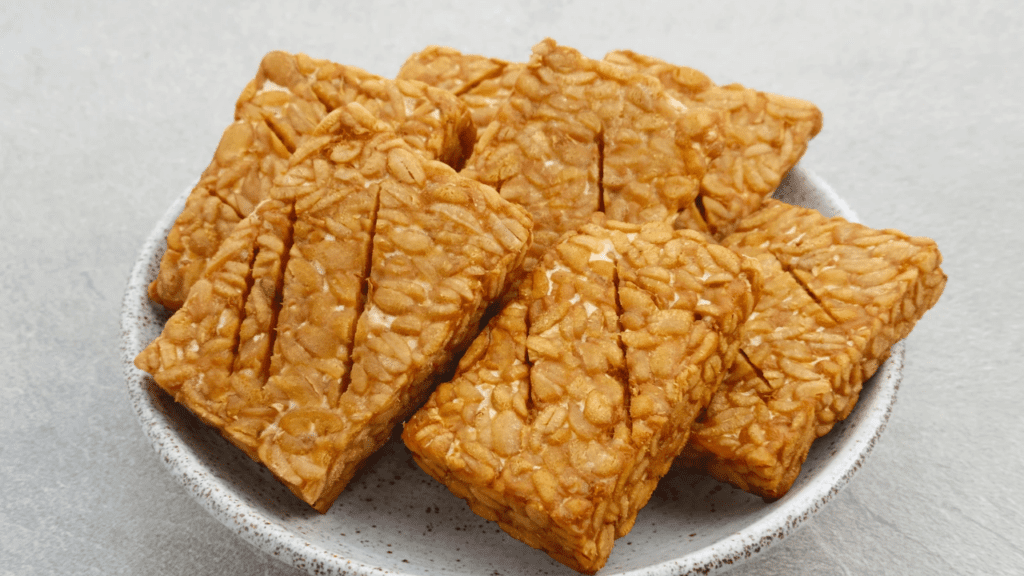
Tempeh is a popular plant-based protein, especially among vegans and vegetarians, but for those who have never tried it, one question often arises: What does tempeh taste like?
The answer isn’t straightforward, as tempeh has a unique, nutty, earthy, and slightly tangy flavor. Its taste can also change depending on how it is prepared and the ingredients used in cooking. In this guide, we’ll explore the taste, texture, and best ways to cook tempeh to maximize its flavor.
Table of Contents
ToggleWhat Is Tempeh?
Tempeh is a traditional Indonesian food made from fermented soybeans. Unlike tofu, which is made from coagulated soy milk, tempeh is made by fermenting whole soybeans and binding them into a firm, dense cake.
This fermentation process enhances the nutritional value of soybeans by increasing their digestibility, protein content, and probiotic benefits. Some variations of tempeh also include grains like rice or barley for added texture and flavor.
What Does Tempeh Taste Like?
Tempeh has a nutty, earthy, and slightly tangy flavor. Its fermentation process gives it a mild umami taste, similar to mushrooms or nuts. Some people detect a slight bitterness, but this can be reduced by steaming or marinating before cooking.
When cooked, tempeh absorbs marinades and seasonings well. It pairs perfectly with bold flavors like soy sauce, barbecue sauce, or smoky spices.
Does Tempeh Taste Like Meat?
While tempeh does not taste exactly like meat, it has a savory, umami depth that makes it a satisfying replacement for chicken, beef, or pork. The firm, chewy texture gives it a substantial bite, unlike tofu, which is softer and more spongy.
Nutritional Benefits of Tempeh
Tempeh is not just a meat alternative—it’s a superfood packed with essential nutrients. Here’s what makes tempeh an excellent addition to a healthy diet:
1. High in Protein
Tempeh is one of the best plant-based protein sources, offering 15 to 20 grams of protein per 100 grams. This makes it comparable to lean meats, eggs, and dairy, making it an excellent option for vegetarians, vegans, and athletes who need sufficient protein intake for muscle repair and growth.
2. Rich in Fiber
Unlike tofu, which lacks fiber, tempeh retains the fiber content of whole soybeans, providing around 7-10 grams of fiber per 100 grams. A high-fiber diet is essential for digestive health, gut bacteria balance, and sustained energy levels.
3. A Natural Source of Probiotics
Since tempeh is fermented, it contains beneficial probiotics that support gut health. Probiotics help maintain a healthy balance of bacteria in the intestines, which can improve digestion, immunity, and even mood.
4. Packed with Essential Vitamins and Minerals
Tempeh is a great source of:
- Calcium (Good for bones, similar to dairy)
- Iron (Essential for red blood cell production)
- Magnesium (Supports muscle and nerve function)
- B Vitamins (Important for energy production and brain function)
5. Low in Saturated Fat and Cholesterol-Free
Unlike animal proteins, tempeh contains healthy unsaturated fats and is completely cholesterol-free, making it heart-friendly and beneficial for those managing high blood pressure or cholesterol levels.
6. Helps with Blood Sugar Control
Due to its high protein and fiber content, tempeh has a low glycemic index (GI), meaning it does not cause rapid blood sugar spikes. This makes it a great option for people with diabetes or those aiming for balanced energy levels throughout the day.
How to Incorporate Tempeh Into Your Dishes
Tempeh can be used in a variety of ways, from stir-fries to sandwiches. Here are some popular ways to cook and enjoy it:
1. Stir-Fried Tempeh
Tempeh absorbs flavors well, making it great for stir-fries. Cut it into cubes or slices, marinate with soy sauce and garlic, and sauté with vegetables like bell peppers and broccoli for a quick and nutritious meal.
2. Tempeh Tacos
Crumble tempeh and sauté it with taco seasoning, onions, and tomato paste. Use it as a filling for tacos, burritos, or nachos.
3. Tempeh Sandwiches
Marinate tempeh slices in soy sauce and balsamic vinegar, then pan-fry or bake until crispy. Add to a sandwich with avocado, lettuce, and tomato for a delicious, protein-packed lunch.
4. Tempeh in Salads
Cube and bake tempeh until crispy, then toss it into salads for an extra protein boost. It pairs well with leafy greens, nuts, and tangy dressings.
5. Grilled Tempeh Skewers
Marinate tempeh chunks in a BBQ or teriyaki sauce, then thread them onto skewers with vegetables like zucchini and bell peppers. Grill for a smoky, flavorful dish.
6. Tempeh Curry
Add cubed tempeh to a coconut curry with spices, potatoes, and chickpeas for a hearty, warming dish.
7. Crumbled Tempeh “Meat”
Use crumbled tempeh as a replacement for ground meat in pasta sauces, chili, or sloppy joes.
Tempeh vs. Other Plant-Based Proteins
Tempeh has a distinct taste and texture compared to other plant-based proteins. Here’s how it stacks up:
| Protein | Taste | Texture | Best Uses |
| Tempeh | Nutty, earthy, slightly tangy | Firm, chewy | Stir-fries, sandwiches, grain bowls |
| Tofu | Mild, slightly bean-like | Soft to firm, depending on type | Soups, scrambles, pan-fried dishes |
| Seitan | Savory, slightly meaty | Dense, chewy | Stir-fries, sandwiches, BBQ dishes |
| Jackfruit | Mild, slightly sweet | Stringy, pulled meat-like | Tacos, pulled “pork” sandwiches |
Final Thoughts: Is Tempeh Right for You?
If you love nutty, earthy flavors and a hearty texture, tempeh is worth trying. It’s a nutritional powerhouse and can be customized with different marinades and cooking techniques. Whether grilled, baked, stir-fried, or crumbled, tempeh is a delicious and protein-rich addition to any diet.
So, next time you see tempeh at the grocery store, give it a shot; you might just discover your new favorite plant-based protein!