

If you’re a food lover who enjoys experimenting new flavors and textures, dim sum is a must-try experience. This beloved Chinese tradition consists of bite-sized dishes served in small bamboo steamers or on small plates, often accompanied by tea.
This guide will walk you through everything you need to know about dim sum and how to enjoy it.
What Is Dim Sum?
Dim sum, which translates to “touch the heart” in Cantonese, is a collection of small dishes typically served in restaurants specializing in Cantonese cuisine.
The tradition dates back centuries to the tea houses of Guangzhou (formerly Canton), where travelers and locals would stop to enjoy tea with small snacks.
Restaurants often serve dim sum in a cart-service format, where waitstaff push carts filled with freshly steamed or fried delicacies, allowing diners to choose what they want.
Some of the most famous dim sum dishes include har gow (shrimp dumplings), siu mai (pork dumplings), char siu bao (BBQ pork buns), and egg tarts.
How Is Dim Sum Made?
Dim sum can be prepared in various ways, depending on the type of dish being made, but the fundamental methods include steaming, frying, baking, and boiling.
Steaming
This is the most common method, especially for dumplings like har gow and siu mai. The dough is usually made from wheat or rice flour, and fillings include pork, shrimp, mushrooms, and vegetables. The dumplings are placed in bamboo steamers and cooked over boiling water.
Frying
Some dim sum dishes, like spring rolls and sesame balls, are deep-fried to achieve a crispy texture. The oil temperature and frying time are crucial in ensuring that the dish remains light and not greasy.
Baking
Many dim sum pastries, such as egg tarts and pineapple buns, are baked to perfection. These dishes often incorporate buttery or flaky crusts filled with sweet or savory ingredients.
Boiling & Blanching
Some dim sum dishes, like wontons, are boiled and served in soup or sauce-based preparations. The boiling method ensures a soft yet firm texture, balancing flavors perfectly.
How to Enjoy Dim Sum
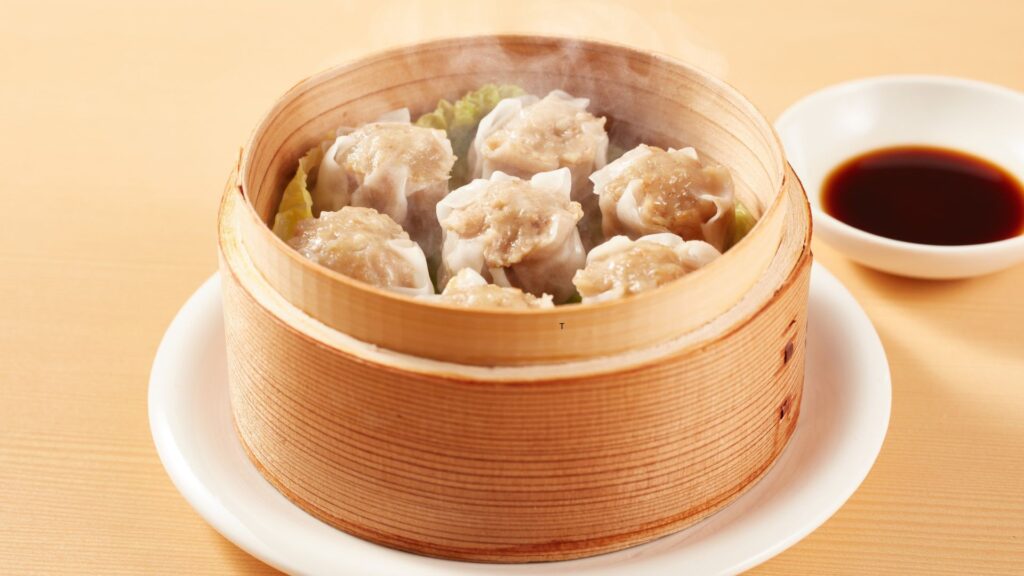
Dim sum is traditionally enjoyed with Chinese tea, making the dining experience known as “yum cha” (drink tea).
The key to eating dim sum properly is to share and savor multiple dishes rather than eating a single large portion. Here are some tips:
1. Order a Variety
If you’re at a restaurant with a cart service, take your time selecting dishes that appeal to you. It’s best to try a mix of steamed, fried, and baked items to experience the full range of flavors.
2. Use Chopsticks or a Spoon
Most dim sum dishes are bite-sized, making them easy to pick up with chopsticks. However, some dishes, such as soup dumplings (xiao long bao), require a spoon to prevent spillage.
3. Dip in Sauces
Soy sauce, vinegar, and chili oil enhance the flavors of dim sum. Try dipping dumplings for an extra kick.
4. Follow Etiquette
If dining with others, it’s polite to serve tea to your companions before pouring your own. When using chopsticks, avoid pointing them at others or sticking them upright in food, as these are considered bad manners in Chinese culture.
How to Store Dim Sum
If you have leftover dim sum, proper storage ensures it remains fresh and safe to eat. Different types of dim sum require different storage methods:
Steamed Dim Sum (Dumplings, Buns)
Store in an airtight container in the refrigerator for up to 2 days. Reheat by steaming for 5-10 minutes until heated through. Avoid microwaving, as it can make the dough tough.
Fried Dim Sum (Spring Rolls, Sesame Balls)
Store in a container lined with a paper towel to absorb excess oil. To reheat, use an oven or air fryer at 350°F (175°C) for a few minutes to retain crispiness.
Baked Dim Sum (Egg Tarts, Pastries)
Store in a sealed container at room temperature for up to a day or in the refrigerator for longer storage. Reheat in an oven at low heat to prevent sogginess.
Frozen Dim Sum
If you’ve bought or made dim sum in bulk, freeze them uncooked in a single layer on a tray before transferring them to a freezer bag. Steam or fry directly from frozen when ready to eat.
Wrapping Up
Dim sum is a traditional Cantonese dining style that consists of small, bite-sized dishes served with tea. It is typically enjoyed in a communal setting, where multiple dishes are shared among family and friends.
The variety of dishes includes dumplings, buns, rice noodle rolls, and pastries, which are prepared using different cooking methods such as steaming, frying, and baking.
