

Choosing the right avocado can make all the difference in the taste and texture of your recipes. Fortunately, you don’t need to be an expert to select the best avocado at the store or market.
With a few insider tips, you can consistently pick avocados that are ripe and ready for immediate use or just a few days away from perfection if you’re planning ahead. Let’s dive in.
Avocado ripeness stages
Before learning how to pick a good avocado, it’s essential to understand its stages of ripeness, as this can significantly improve your selection process. Avocados ripen off the tree, going through several stages from hard to perfectly ripe and eventually overripe:
- Hard (Unripe): These avocados have bright green skin and are very firm. They take about four to five days to ripen at room temperature.
- Breaking (Semi-ripe): These have darker green skin and are somewhat firm but yield slightly to gentle pressure. They ripen in one to two days.
- Ripe: They have dark green to black skin and yield to gentle pressure without feeling mushy. They are perfect for eating immediately.
- Overripe: These avocados feel very soft or mushy under gentle pressure and may have brown or black spots inside.
Essential tips for selecting a good avocado
Check the color
The color of an avocado gives you the first hint about its ripeness. Hass avocados, the most common variety, change from bright green to dark green or black as they ripen. However, note that some avocados remain green even when ripe. Let’s consider the next tip.
Feel the texture
Gently hold the avocado in the palm of your hand and apply light pressure. A ripe avocado will yield to firm, gentle pressure, indicating it’s ready to eat. Avoid using your fingertips, as this can bruise the fruit. An avocado that feels too soft may be overripe, and if it’s very firm, it will need a few days to ripen at home.
Check the stem
One lesser-known method to test an avocado’s ripeness is to check the stem or cap at the top of the fruit. Carefully flick off the stem; if it comes away easily and you find green underneath, the avocado is ripe.
If the stem doesn’t budge, the fruit is not ripe enough. Conversely, if you find a brown color underneath, the avocado might be overripe.
Consider your timing
When you plan to use the avocado can also guide your selection. If you need an avocado to use right away, follow the above tips to find a ripe one. However, if you’re stocking up for the week, choose avocados at various ripeness stages or buy them firm and let them ripen at home.
You may also like: Does avocados make you fat?
How to ripen avocados quickly
Sometimes, you might find a firm, unripe avocado but a craving that won’t wait. Fortunately, there are a few tricks to speed up the ripening process:
The paper bag method
This method can reduce ripening to about 24-48 hours. To begin, place your unripe avocado inside a brown paper bag and seal it. The bag traps the ethylene gas produced by the avocado, helping it ripen faster.
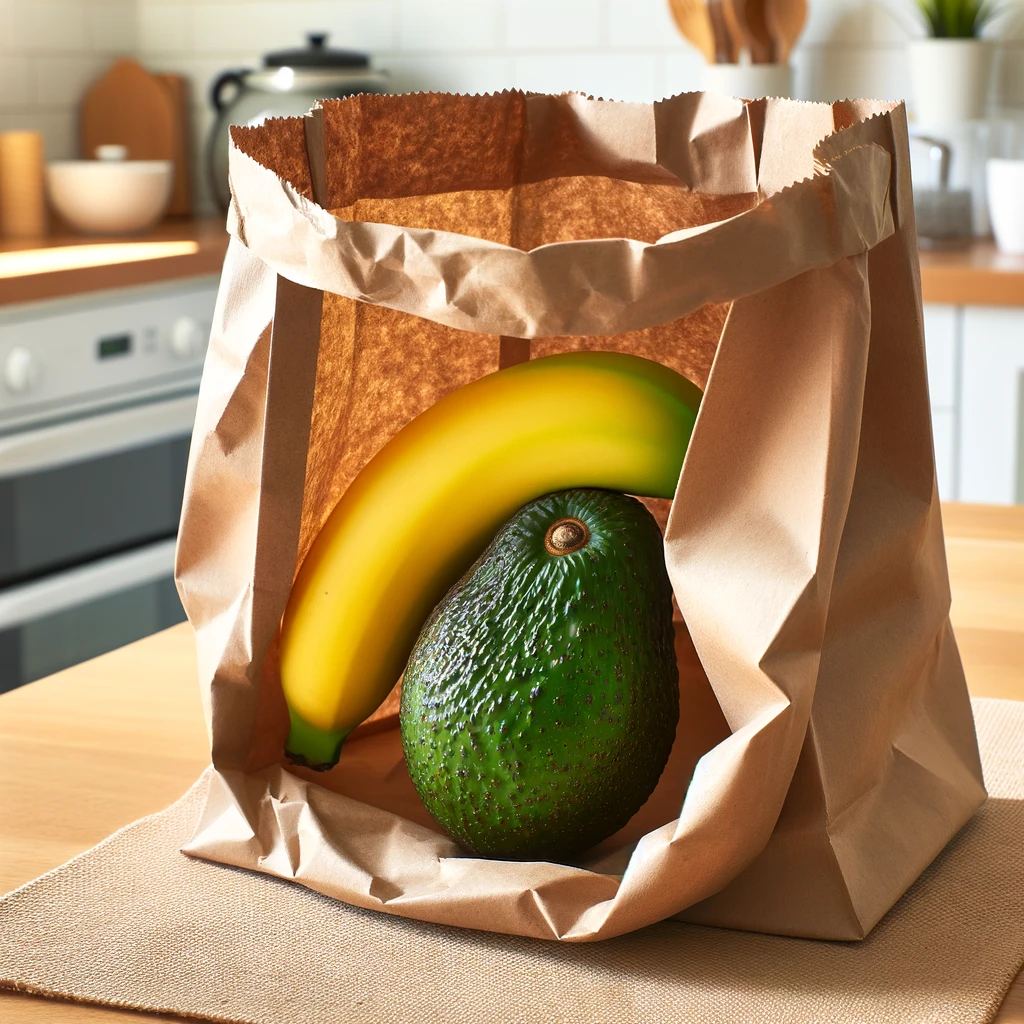
For even quicker results, add an apple or a banana to the bag. These fruits release more ethylene gas, speeding up the ripening of the avocado.
The flour method
This method can be particularly useful if you’re trying to ripen several avocados at once. Fill a container with flour and fully submerge the avocado. The flour acts similarly to the paper bag, trapping the ethylene gas close to the avocado.

The rice method
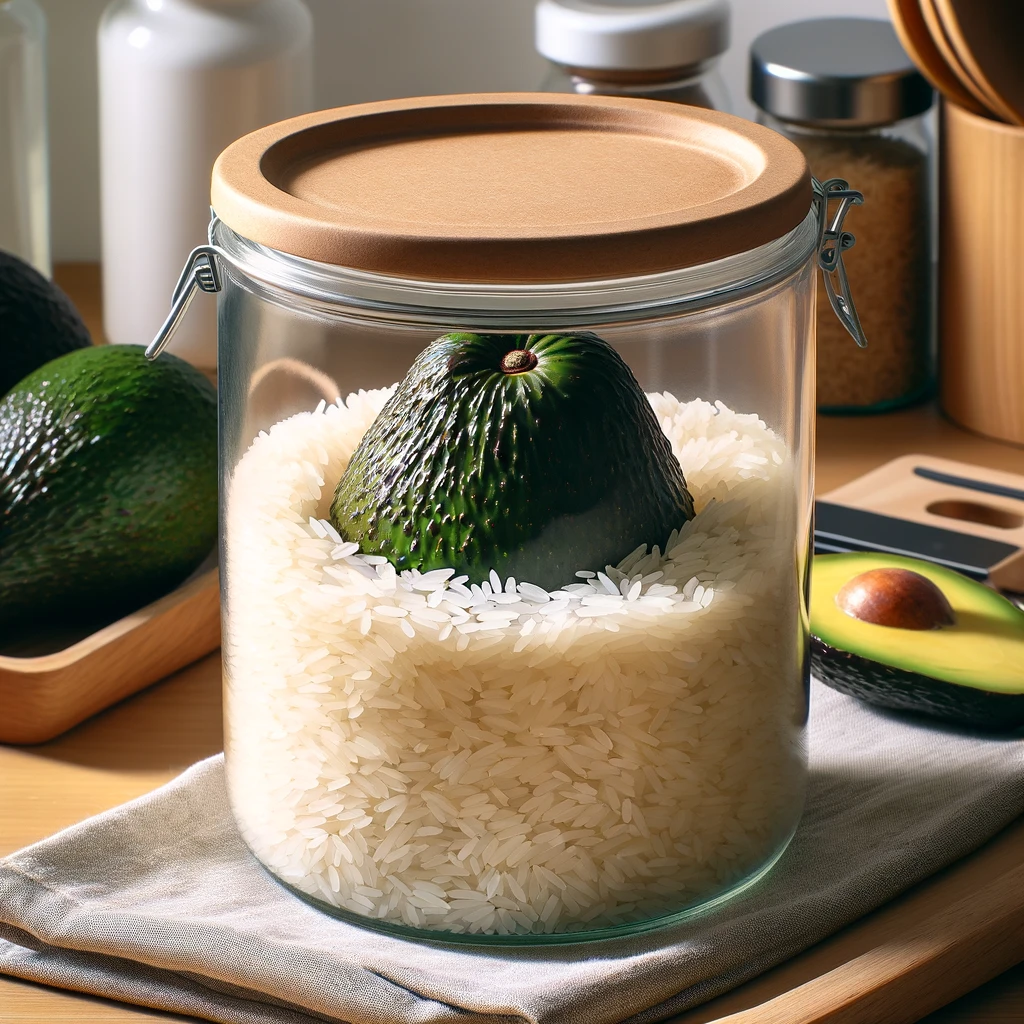
Like the flour method, burying your avocado in a container of uncooked rice can also expedite the ripening process. The rice traps the ethylene gas around the avocado, helping it to ripen faster. To slow ripening, store them in the refrigerator.
How to store avocados properly
Before ripeness
If your avocados are still firm and need time to ripen, leave them out at room temperature. A kitchen counter or pantry shelf is perfect. Avoid direct sunlight as it can cause uneven ripening.
Storing ripe avocados
Once your avocados have reached their peak ripeness — yielding slightly to gentle pressure — it’s time to consume or refrigerate them. Whole ripe avocados can last 2-3 days in the fridge without losing taste or texture.
Preserving cut avocados
If you’ve cut into an avocado and want to save the rest for later, it’s important to minimize the exposed surface area’s contact with air to prevent browning. To do this, leave the pit in the unused half as it helps to reduce surface browning.
Next, lightly brush the exposed flesh with lemon or lime juice to give it a protective acid layer. Wrap the avocado tightly in plastic wrap or place it in an airtight container and refrigerate. Cut avocados are best eaten within 1-2 days for optimal quality.
Also read: 11 Best Fruit Smoothies For Pregnant Women
Freezing avocados
You may also decide to freeze avocados to enhance their shelf life. However, this process can can affect their texture, making them best suited for smoothies, guacamole, or other recipes where their creaminess is desired rather than their firmness. To freeze avocados:
- Peel and pit the avocados.
- Puree the flesh with a bit of lemon or lime juice to prevent browning.
- Store the puree in airtight containers or freezer bags, expelling as much air as possible before sealing.
- Frozen avocado puree can last for up to 5-6 months.
FAQs
How long does avocados last?
The lifespan of avocados depends on their ripeness and how they are stored. Unripe avocados can last 4-7 days at room temperature until they ripen. Once ripe, avocados can last in the refrigerator for 2-3 days if kept whole.
Does avocado have iron?
Yes, avocados contain a relatively small amount of iron. On average, a medium-sized avocado contains about 0.55 milligrams of iron.
Does avocado contain potassium?
Yes, avocados are an excellent source of potassium. A medium-sized avocado contains approximately 727 milligrams of potassium, about 16% of the Recommended Dietary Allowance (RDA) for adults.
Does avocado need to be refrigerated?
Unripe avocados should not be refrigerated as cold temperatures slow the ripening process. Once ripe, they can be refrigerated to slow down further ripening and deterioration, extending their freshness for a few more days.
Wrapping up: How do I choose a good avocado?
Choosing the perfect avocado doesn’t have to be a hit or miss. By using these simple tips—examining color, assessing firmness, and checking the stem—you can consistently select avocados that are just right for you.