
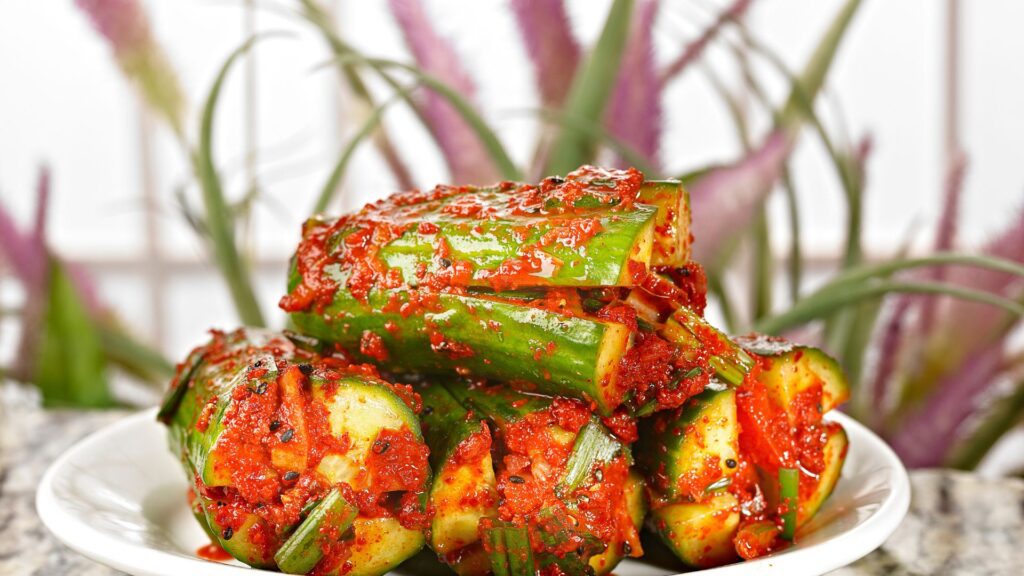
Vegan cucumber kimchi is a crisp, spicy, and refreshingly tangy take on one of Korea’s most beloved fermented dishes. Unlike traditional kimchi, which often uses fish sauce or shrimp paste, the vegan version relies on plant-based ingredients to bring out the same depth of flavor with a lighter, cleaner finish.
This article will show you how to make vegan cucumber kimchi at home using simple steps and accessible ingredients. You’ll learn the best type of cucumbers to use, how to get the right balance of spice and acidity, and how to safely ferment the dish for the most satisfying result. It’s all about bold taste, texture, and freshness.
Table of Contents
Toggle1. Choose The Right Cucumbers For Texture And Flavor
The best cucumbers for vegan kimchi are thin-skinned and firm. Persian or Kirby cucumbers work well because they hold their shape during fermentation without becoming soggy. Avoid waxed cucumbers from grocery stores, as the coating prevents the brine from penetrating evenly.
Slice the cucumbers in half lengthwise, then quarter each half into long spears or bite-size chunks. If the cucumbers are seedy, remove some of the seeds with a spoon to keep the texture crisp.
2. Salt The Cucumbers To Release Excess Water
Salting is the first step toward developing flavor. Generously toss your cut cucumbers with coarse sea salt, then let them rest in a bowl for 30 to 40 minutes. This process draws out moisture and makes room for the flavors of garlic, chili, and ginger to soak in during fermentation.
After salting, rinse the cucumbers well under cold water to remove excess salt. Let them drain completely before moving on to seasoning. This prevents the kimchi from becoming too watery later.
3. Make A Flavorful Vegan Kimchi Paste
The seasoning paste is what gives cucumber kimchi its kick. Traditional kimchi often includes fermented shrimp or anchovy sauce, but this version swaps in soy sauce or tamari and uses miso for a touch of umami. The heat comes from Korean red chili flakes, also called gochugaru.
Key Paste Ingredients
- Korean red chili flakes (gochugaru)
- Fresh garlic
- Fresh ginger
- Tamari or soy sauce
- Miso paste
- Rice vinegar
- A pinch of sugar for balance
Mash or blend the ingredients into a thick paste. Adjust chili flakes to your heat preference. You want the mixture to be spicy, tangy, and slightly sweet.
4. Add Vegetables For More Texture And Flavor
Thin slices of scallions and matchstick-cut carrots bring texture and contrast to the kimchi. These vegetables soak up flavor and ferment along with the cucumbers. They also contribute to the overall bite and make the kimchi more satisfying.
Add these vegetables directly into the seasoning paste before combining it with the cucumbers. This step ensures even distribution of flavor across all the components.
5. Combine Everything And Let It Ferment Properly
Once your cucumbers are salted and rinsed, and your paste is ready, toss everything together in a large bowl. Use gloves if needed to evenly coat every piece with the red seasoning paste. Press the mixture tightly into a clean glass jar, leaving some space at the top to allow for expansion during fermentation.
Let the jar sit at room temperature for about 24 hours, then transfer it to the refrigerator. This slower, cold fermentation helps preserve the crunch and keeps the flavor bright and punchy. The kimchi will develop over time and can be eaten within a day or kept for up to two weeks.
6. Store And Serve With The Right Pairings
Keep vegan cucumber kimchi refrigerated in a sealed glass jar. Use clean utensils every time you scoop some out to avoid contamination. The flavor deepens with time but is most vibrant within the first week.
It’s perfect as a side dish with rice bowls, noodles, or grilled tofu. You can also use it to add a spicy kick to sandwiches, wraps, or salads. The fermented bite cuts through richness and balances heavier dishes.
7. Adjust Heat And Acidity To Your Taste
If you prefer less heat, reduce the amount of gochugaru or blend it with sweet paprika for a milder version. For sharper acidity, increase the rice vinegar slightly or add a splash of lemon juice. These adjustments allow you to tailor the kimchi to your preferences without compromising its traditional punch.
Taste after the first day in the fridge and tweak future batches based on what you like. Kimchi is as much about personalization as it is about tradition.
Wrapping Up
Vegan cucumber kimchi is easy to make at home with the right ingredients, a little patience, and a clear process. Its bold flavor and crisp texture make it a standout addition to plant-based meals and snacks.
By following these steps, you can enjoy fresh kimchi in just a day, with flavors that evolve each time you open the jar. Once you master the basics, experimenting with new additions and spice levels becomes part of the fun. It’s a great way to bring fermentation into your kitchen with confidence.
