
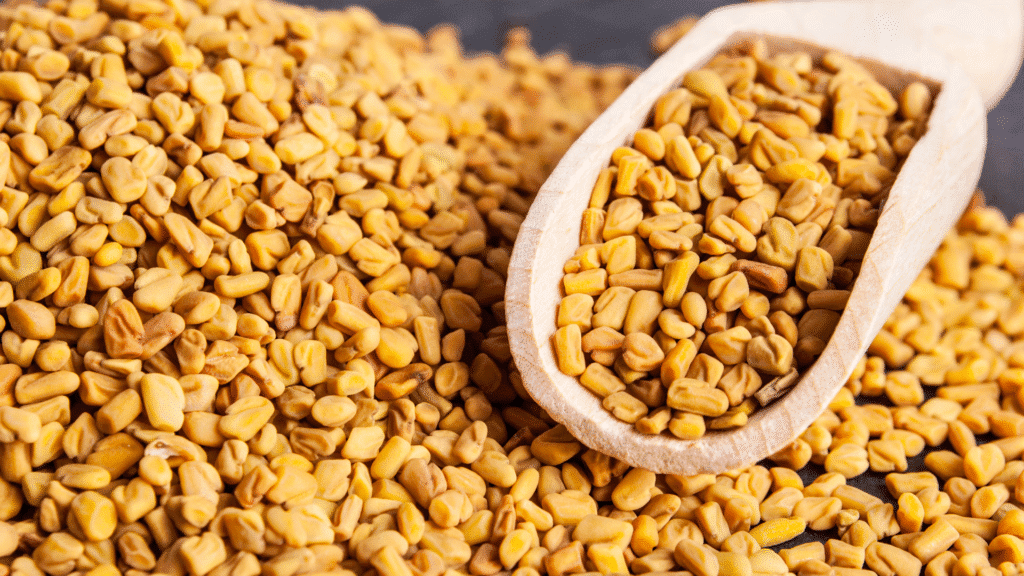
Fenugreek has been studied extensively for its potential health benefits.
Modern research highlights the potential of fenugreek in managing blood sugar levels, while also providing benefits for athletes and nursing mothers.
In this article, you’ll learn about the top 8 health benefits of fenugreek and how to eat fenugreek.
What is fenugreek?
Fenugreek (Trigonella foenum-graecum) is a plant that belongs to the Fabaceae family, commonly known as the legume or pea family.
It has been used for centuries in traditional medicine and cooking, particularly in South Asia, the Middle East, and the Mediterranean.
The plant produces small, yellow-brown seeds that have a slightly bitter taste. The leaves, known as methi in India, are used as a leafy green vegetable in cooking.
Fenugreek nutrition facts
Fenugreek seeds are rich in proteins, dietary fiber, B vitamins, iron, magnesium, and manganese.
They also contain powerful bioactive compounds like saponins, flavonoids, and alkaloids, contributing to their health benefits.
Here’s what one tablespoon (11.1 grams) of fenugreek seeds contain:
| Nutrient | Amount per Tbs |
| Calories | 35 kcal |
| Carbohydrates | 6.5 grams |
| Dietary Fiber | 2.7 grams |
| Protein | 2.6 grams |
| Fat | 0.7 grams |
| Iron | 3.7 mg (20% DV) |
| Magnesium | 21 mg (5% DV) |
| Manganese | 0.1 mg (7% DV) |
| Copper | 0.1 mg (6% DV) |
| Vitamin B6 | 0.1 mg (5% DV) |
| Folate | 6 mcg (2% DV) |
| Potassium | 85 mg (2% DV) |
| Phosphorus | 33 mg (3% DV) |
Health benefits of fenugreek

1. May aid in blood sugar control
Fenugreek is renowned for its ability to help manage blood sugar levels, making it particularly beneficial for people with diabetes.
The seeds contain soluble fiber, particularly galactomannan, which slows carbohydrate absorption and improves glucose tolerance.
Additionally, compounds like 4-hydroxyisoleucine in fenugreek enhance insulin secretion, further aiding blood sugar control.
2. Possess anti-cancer properties
Another important benefit of fenugreek is its anti-cancer properties. Fenugreek seeds contain bioactive compounds like diosgenin, which have shown potential in fighting various cancers, including prostate, breast, and colon cancer.
Studies suggest that these compounds can reduce tumor growth and may act as a preventive measure against cancer development.
3. Anti-inflammatory and antioxidant effects
The anti-inflammatory and antioxidant effects are essential health benefits of fenugreek. These properties make it effective in treating inflammatory conditions like arthritis and skin disorders.
The antioxidants in fenugreek help combat oxidative stress, which can lead to chronic diseases like heart disease and cancer.
4. Supports digestion and weight management
The high fiber content in fenugreek aids digestion by promoting regular bowel movements and detoxifying the digestive system.
Additionally, the seeds can create a feeling of fullness, which helps in appetite control and weight management.
5. Better athletic performance and sexual health
Fenugreek may improve athletic performance by enhancing muscle strength and recovery.
Studies have shown that supplementation with fenugreek can positively impact body composition and improve anaerobic exercise performance.
It has also been found to improve testosterone levels and overall sexual function in men.
- See Also: Benefits of Cloves For Sexual Health
6. Increases breast milk production
One of the most widely recognized benefits of fenugreek is its ability to increase breast milk production.
The herb contains diosgenin, which is believed to stimulate milk production. Some studies have shown that fenugreek supplementation can significantly boost milk supply within days.
7. Boosts cardiovascular health
Fenugreek’s ability to lower cholesterol levels, particularly LDL cholesterol, and its anti-inflammatory properties contribute to heart health.
Regular consumption of fenugreek has been linked to a reduction in total cholesterol, triglycerides, and the risk of developing cardiovascular diseases.
8. Hormonal balance and menstrual health
Fenugreek has been traditionally used to relieve symptoms of menopause and balance hormones. Studies have shown that fenugreek can reduce the severity of hot flashes and other menopausal symptoms.
Additionally, it has been used to alleviate menstrual pain (dysmenorrhea) and manage premenstrual symptoms by acting on estrogen receptors.
How to eat fenugreek
Fenugreek can be consumed in various forms, each offering unique health benefits and flavors. Here are some common ways to eat fenugreek:
1. Sprouted fenugreek seeds
Sprouting fenugreek seeds enhances their nutritional content and makes them easier to digest. You can sprout the seeds by soaking them in water overnight, draining them, and allowing them to sprout for a couple of days. These sprouts can be added to salads, sandwiches, or smoothies for a nutritious boost.
2. Fenugreek tea
This is made by boiling fenugreek seeds in water. The tea has a slightly bitter taste but helps to soothe digestive issues and regulate blood sugar levels. You can add a bit of honey or lemon to improve the flavor.
3. Fenugreek powder
Fenugreek seeds can be ground into a fine powder and used as a spice in various dishes. Fenugreek powder is a key ingredient in curry powders and spice blends. It can also be added to soups, stews, or baked goods for a hint of bitterness and a boost in nutritional value.
4. Fenugreek leaves (Methi)
Fresh or dried fenugreek leaves can be added to curries, stir-fries, and flatbreads like methi paratha. Like fenugreek seeds, these leaves have a slightly bitter taste.
- Also Read: Benefits of Curry Leaves
5. Fenugreek supplements
For those looking for a more convenient way to consume fenugreek, supplements are available in the form of capsules, tablets, or liquid extracts. These supplements are often used for specific health benefits, such as improving lactation or managing blood sugar levels.
Are there any side effects associated with fenugreek?
While fenugreek is generally considered safe, some individuals may experience gastrointestinal discomfort, diarrhea, or a maple syrup-like odor in sweat and urine.
It may also cause allergic reactions in some people and should be used with caution by those with allergies to legumes.
Additionally, fenugreek may interact with certain medications, particularly those for diabetes and blood clotting. If you have any underlying condition, consult your doctor before incorporating fenugreek into your diet.
Frequently asked questions
Is fenugreek safe for everyone?
Fenugreek is generally safe for most people when consumed in moderate amounts. However, it may cause diarrhea or allergic reactions in some individuals. Pregnant women should consult their healthcare provider before using fenugreek, as it can stimulate uterine contractions.
Can fenugreek help with hair growth?
Fenugreek is often touted as a natural remedy for hair growth due to its high protein and nicotinic acid content, which are known to strengthen hair and promote growth. While there is some anecdotal evidence supporting this claim, more research is needed to confirm its effectiveness.
How long does fenugreek last?
Fenugreek seeds can last up to 2-3 years when stored in an airtight container in a cool, dry place. If you have ground fenugreek, you can expect them to last about 6 months to a year. Fresh fenugreek leaves usually last 2-3 days when stored in the refrigerator.
Wrapping up
The health benefits of fenugreek extend across various aspects of health, from blood sugar regulation to anti-inflammatory effects and cancer prevention.
The diverse compounds in fenugreek, such as galactomannan and diosgenin, are at the core of these medicinal properties.
However, while the benefits are numerous, it’s essential to approach its use with informed guidance, especially for those with specific health concerns.