

You’re likely familiar with the soft, tender bite of cooked asparagus, but have you ever considered eating it raw? Can you even eat asparagus without cooking it first?
The answer is a resounding yes. Eating raw asparagus is not only safe but it’s also very nutritious. While cooking can enhance the bioavailability of some compounds, eating asparagus raw ensures that you retain certain vitamins and fiber in their purest form. Let’s get into the details.
What is asparagus?
Asparagus (Asparagus officinalis) is a spear-like shaped vegetable native to Europe, northern Africa, and western Asia. Its slightly bitter taste pairs well with various dishes, and it’s often enjoyed steamed, roasted, or grilled.
This veggie is a nutritional powerhouse, rich in vitamins A, C, E, and K, as well as folate and fiber. Asparagus is also packed with antioxidants and known for its diuretic properties, which may support kidney function.
Can you eat asparagus raw?
Yes, you can eat asparagus raw – it’s absolutely safe! Consuming raw asparagus can help you get the most of its delicate nutrients. While cooking boosts certain antioxidants, it can also reduce levels of heat-sensitive vitamins, such as vitamin C.
Are there any risks of eating raw asparagus?
For most people, eating raw asparagus poses no significant health risk. However, it’s important to note that raw asparagus is high in insoluble fiber, which can be tough for some people to digest.
This could lead to bloating, gas, or stomach discomfort, particularly for those with sensitive digestive systems.
Additionally, asparagus contains asparagine, which when metabolized, gives off a distinctive odor in urine. While this isn’t harmful, many might find it surprising.
How to prepare raw asparagus
Raw asparagus can be slightly fibrous, but when prepared correctly, it’s palatable and delicious. Here’s how to get the best out of raw asparagus:
Step 1: Wash thoroughly
Rinse asparagus under cold water to remove dirt or grit, paying close attention to the tips, which can trap soil.
Step 2: Trim or peel
The bottom end of asparagus stalks is often tough and woody, so it’s best to trim about an inch off. For thicker stalks, consider peeling the lower part to remove the fibrous outer layer, making it easier to chew.
Step 3: Shave or slice
Thinly shaving asparagus with a vegetable peeler can create delicate ribbons that work well in salads. You can also slice it diagonally or into thin coins for easier chewing.
Step 4: Marinate
Let raw asparagus sit in an acidic marinade (lemon juice or vinegar) for 15–30 minutes. This process helps break down some fibers, making the vegetable more tender and flavorful.
- Related: Can You Eat Tofu Raw?
Does cooking asparagus have any advantages?
Though raw asparagus offers a range of health benefits, cooking it is also beneficial.
Studies show that cooking asparagus increases its levels of antioxidants like ferulic acid, which benefits heart function and has anti-inflammatory properties.
Additionally, cooked asparagus is easier for most people to digest, and often has a milder, sweeter taste. Therefore, incorporating raw and cooked asparagus into your diet lets you enjoy the best of both worlds.
Recipe ideas: Best ways to enjoy raw asparagus
If you’re ready to try raw asparagus, here are some simple and delicious ways to enjoy it:
1. Raw asparagus salad
Toss raw, shaved asparagus with olive oil, lemon juice, salt, and pepper. Add raw vegetables like carrots, radishes, and thinly sliced fennel for a crunchy and refreshing salad.
2. Asparagus carpaccio
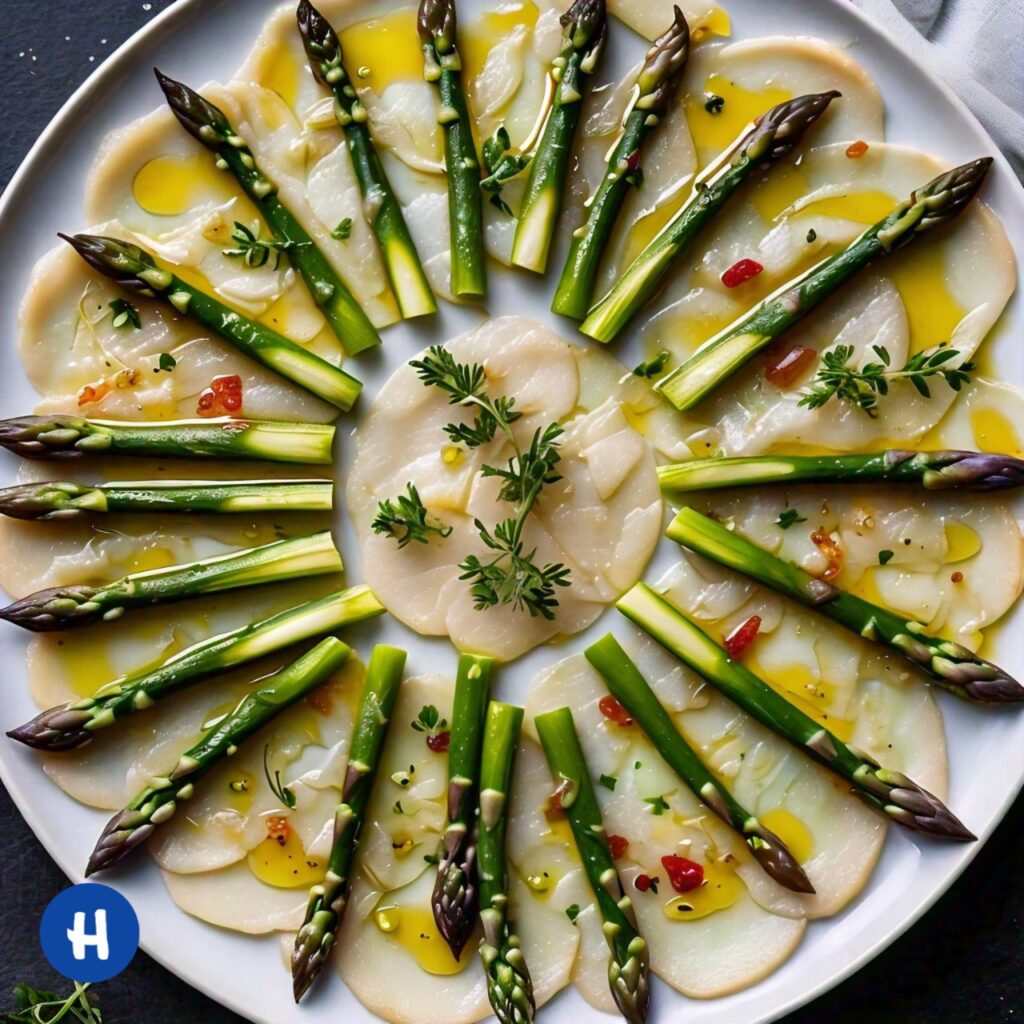
Thinly slice asparagus spears and arrange them on a plate. Drizzle with extra virgin olive oil, lemon juice, and sprinkle with sea salt and freshly cracked black pepper. For added flavor, top with Parmesan shavings or toasted pine nuts.
3. Raw asparagus dips
Raw asparagus spears make an excellent addition to veggie platters. Pair them with hummus, tzatziki, or a creamy yogurt-based dip for a light healthy snack.
4. Pesto

Create a unique twist on pesto by blending raw asparagus with fresh herbs like basil, garlic, nuts, and olive oil. This can be used as a spread, dressing, or pasta sauce.
- Also read: Can You Eat Kiwi Skin?
Nutritional profile of asparagus
According to USDA, one cup (134 grams) of raw asparagus contains the following:
- Calories: 27
- Protein: 3 grams
- Fiber: 3 grams
- Sugars: 2 grams
- Vitamin K: 56 micrograms (47% of the Daily Value, DV)
- Vitamin C: 7.5 milligrams (13% DV)
- Vitamin A: 51 micrograms (6% DV)
- Folate: 70 micrograms (17% DV)
- Potassium: 271 milligrams (8% DV)
- Iron: 3 milligrams (16% DV)
How to store asparagus properly
To store asparagus and keep it fresh for as long as possible, there are two effective methods you can use:
1. The jar method (like fresh flowers):
- Trim the ends: Cut about 1 inch from the bottom of the stalks to remove the tough, dry part.
- Place in a jar with water: Stand the asparagus spears upright in a jar or glass with about 1 inch of water, just enough to cover the bottom ends.
- Cover loosely: Place a plastic bag over the top of the asparagus (not tightly sealed).
- Refrigerate: Store the jar in the refrigerator. This method helps keep the asparagus fresh for up to a week by allowing the stalks to stay hydrated, similar to how you’d store fresh flowers.
2. Damp paper towel method:
- Trim the ends: Like the jar method, cut about 1 inch from the bottom.
- Wrap in a damp paper towel: Gently wrap the asparagus spears in a damp (not soaking wet) paper towel.
- Store in a plastic bag: Place the wrapped asparagus in a plastic bag or container, but don’t seal it tightly to allow some airflow.
- Refrigerate: Keep the wrapped asparagus in the fridge. This method will also keep asparagus fresh for 4–7 days.
Final thoughts: Can you eat asparagus raw?
Raw asparagus is a nutritious addition to your diet. You can slice it for salads, blend it into a pesto, or simply enjoy it with a dip.
To make the most of its delicate flavor, opt for thinner spears, which are generally more tender and sweeter than thicker ones.
While some people may experience digestive discomfort due to the fiber content, eating raw asparagus in moderation is a fantastic way to enjoy its full range of nutrients.