

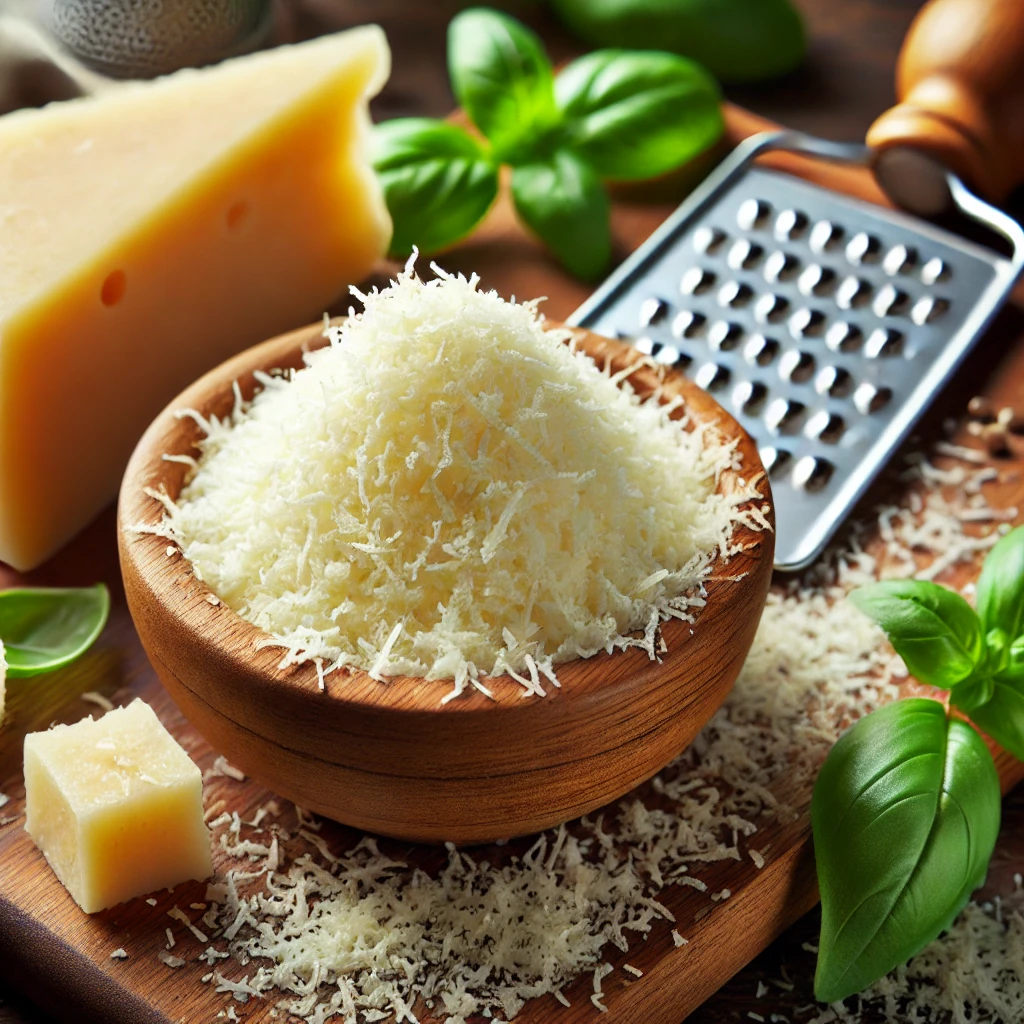
Popularly referred to as the King of Cheeses, Parmesan cheese or Parmigiano-Reggiano is a hard, granular cheese that originated in Italy.
In Europe, the name “Parmesan” is legally protected, and only cheese produced in the designated regions of Italy, such as Parma, Reggio Emilia, Bologna, Modena, and Mantua can bear the name Parmigiano Reggiano.
However, parmesan cheese available in the United States can be made with a blend of different cheeses. In this article, you’ll learn about the nutritional value of parmesan cheese, its benefits, and healthy recipes with parmesan cheese.
Nutritional information of parmesan cheese
A typical serving size of Parmesan cheese is about 1 ounce (28 grams). This serving contains approximately 110-120 calories, making it relatively calorie-dense due to its fat and protein content.
Here’s a breakdown of the nutritional content per 1-ounce (28-gram) serving of hard parmesan cheese:
- Calories: 111
- Protein: 10 grams
- Fat: 7 grams
- Saturated Fat: 4.8 grams
- Carbohydrates: 1 gram
- Calcium: 335 mg
- Phosphorus: 197 mg
- Sodium: 335 mg
- Vitamin A: 221 IU
How is parmesan cheese produced?
True Parmigiano Reggiano is characterized by a sharp, complex fruity/nutty taste and a slightly gritty texture. Here’s how it’s produced:
- Milk collection: The cheese is made from unpasteurized cow’s milk. The whole milk from the morning milking is mixed with the naturally skimmed milk of the previous evening’s milking.
- Curdling: The milk mixture is pumped into large copper-lined vats, which provide even heating and add copper ions to the mix. Starter whey and calf rennet are then introduced to curdle the milk, a process that takes about 10–12 minutes.
- Curd processing: The curd is mechanically broken into small pieces, approximately the size of rice grains. The temperature is raised to 55°C (131°F), and the curd is left to settle for 45–60 minutes.
- Molding: The curd is collected in muslin cloth, divided in two, and placed into molds. Each vat produces two wheels of cheese, each weighing around 45 kilograms (99 pounds).
- Salting: The molded cheese is then placed in a stainless steel form that shapes it into a wheel. After a day or two, the cheese is transferred to a brine bath where it absorbs salt for 20–25 days.
- Aging: The cheese wheels are moved to aging rooms where they are stored on wooden shelves. The aging process lasts a minimum of 12 months, during which the wheels are turned and cleaned regularly.
- Quality control: At 12 months, each wheel is inspected by the Consorzio del Formaggio Parmigiano Reggiano. Those that pass are heat-branded with the Consorzio’s logo. The cheese can continue to age, developing richer flavors and a crumblier texture over time.
Benefits of parmesan cheese
Supports bone health
While many cheeses are good sources of calcium, Parmesan offers one of the highest concentrations, offering approximately 33% of the daily recommended intake per ounce.
Regular consumption of calcium-rich foods like Parmesan can help improve bone density and reduce the risk of osteoporosis and fractures.
Phosphorus, also abundant in Parmesan, works in tandem with calcium to support bone formation and maintenance.
Rich in protein
Compared to blue cheese, parmesan cheese is higher in protein, which is essential for muscle growth, repair, and overall body maintenance. It helps you feel fuller, which can aid in weight management.
Low lactose content
Parmesan cheese undergoes a long aging process, typically between 12 to 36 months. This extensive aging reduces the lactose content, making Parmesan cheese a more digestible option for those with lactose sensitivity.
Supports digestive health
Aged cheeses like Parmesan often contain beneficial bacteria that can support digestive health. These probiotics can help balance the gut microbiota, which is essential for a healthy digestive system.
Related: Is Ricotta Cheese Fattening?
How to use parmesan cheese
Parmesan cheese is incredibly versatile. It can be grated over pasta, salads, and soups, mixed into sauces, or even eaten on its own as a snack. Here are some healthy recipes involving parmesan cheese:
Parmesan roasted vegetables
- Ingredients: Assorted vegetables (such as broccoli, carrots, bell peppers), olive oil, grated Parmesan cheese, salt, and pepper.
- Instructions:
- Preheat the oven to 400°F (200°C).
- Toss the vegetables with olive oil, salt, and pepper.
- Spread the vegetables on a baking sheet and sprinkle with Parmesan cheese.
- Roast for 20-25 minutes or until tender and golden brown.
Parmesan-crusted chicken
- Ingredients: Chicken breasts, whole-grain breadcrumbs, grated Parmesan cheese, egg, salt, and pepper.
- Instructions:
- Preheat the oven to 375°F (190°C).
- Mix breadcrumbs and Parmesan cheese in a shallow dish.
- Beat an egg in another shallow dish.
- Season the chicken breasts with salt and pepper.
- Dip the chicken in the egg, then coat it with the breadcrumb-Parmesan mixture.
- Place on a baking sheet and bake for 25-30 minutes, until the chicken is cooked through and the crust is golden brown.
Parmesan spinach salad
- Ingredients: Fresh spinach, lemon juice, olive oil, grated Parmesan cheese, salt, and pepper.
- Instructions:
- In a large bowl, toss the spinach with lemon juice and olive oil.
- Season with salt and pepper.
- Sprinkle with grated Parmesan cheese and serve immediately.
Parmesan and herb-stuffed mushrooms
- Ingredients: Button mushrooms, grated Parmesan cheese, minced garlic, chopped fresh herbs (such as parsley and thyme), olive oil, salt, and pepper.
- Instructions:
- Preheat the oven to 375°F (190°C).
- Remove the stems from the mushrooms and chop finely.
- In a bowl, mix the chopped mushroom stems with Parmesan cheese, garlic, herbs, olive oil, salt, and pepper.
- Fill the mushroom caps with the mixture.
- Place on a baking sheet and bake for 15-20 minutes, until the mushrooms are tender and the topping is golden brown.
Related: What is Pizza Cheese?
Zucchini noodles with parmesan and garlic
- Ingredients: Zucchini (spiralized into noodles), minced garlic, olive oil, grated Parmesan cheese, salt, and pepper.
- Instructions:
- Heat olive oil in a large skillet over medium heat.
- Add the minced garlic and sauté until fragrant.
- Add the zucchini noodles and cook for 3-5 minutes until tender.
- Season with salt and pepper.
- Lastly, sprinkle with grated Parmesan cheese before serving.
Wrapping up: Nutritional information of parmesan cheese
In summary, Parmesan cheese is a nutrient-dense food that offers numerous health benefits, particularly for bone health and protein intake. While it is high in calories and fat, its strong flavor allows for smaller portions, making it a valuable part of a balanced diet.
