
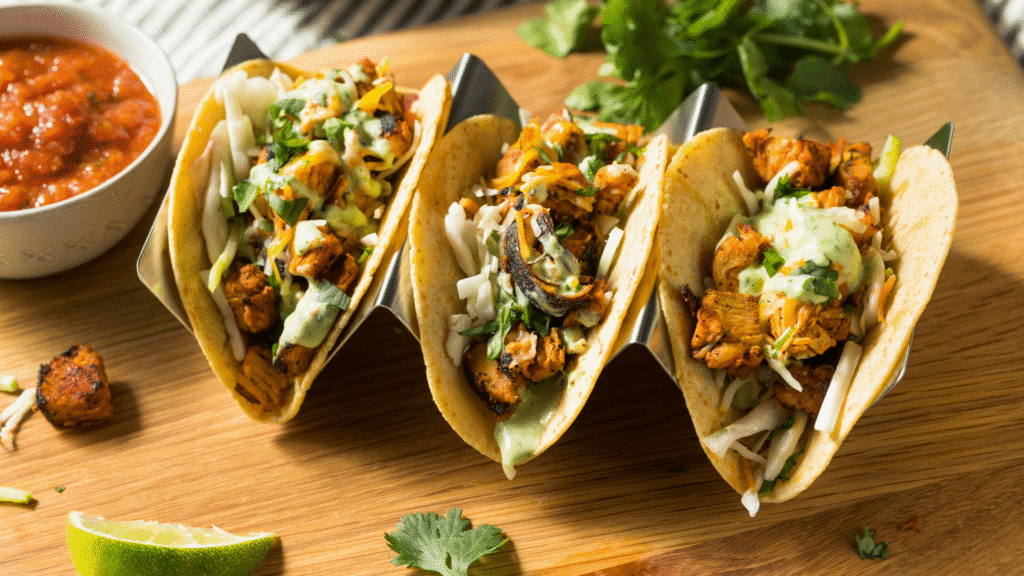
Tacos are one of the most popular foods in the world. From food trucks in Los Angeles to home kitchens across Latin America, tacos are celebrated for their bold flavors, customizable ingredients, and cultural versatility. But, are tacos fattening?
To answer that question, we need to look past the generalization and unpack the many variations of tacos. A street taco loaded with grilled veggies and lean meat is a far cry from a fast-food taco drowning in cheese and sour cream. So let’s dig into the nutrition facts, key ingredients, and smarter ways to enjoy tacos without sabotaging your diet.
Nutritional Profile of a Typical Taco
To understand whether tacos are fattening, we first need to understand what goes into a standard taco. Let’s consider a basic beef taco with a flour tortilla, ground beef, shredded cheddar, lettuce, sour cream, and salsa.
| Ingredient | Calories | Total Fat | Protein | Carbs | Fiber | Sodium |
| Flour tortilla (8″) | 140 | 4g | 4g | 24g | 1g | 260mg |
| Ground beef (85/15, 3 oz cooked) | 210 | 17g | 19g | 0g | 0g | 70mg |
| Shredded cheddar (1 oz) | 110 | 9g | 7g | 1g | 0g | 180mg |
| Sour cream (1 tbsp) | 25 | 2.5g | 0g | 1g | 0g | 10mg |
| Lettuce & salsa | ~20 | 0g | 0g | 4g | 1g | 150mg |
| Total per taco | 505 | 32.5g | 30g | 30g | 2g | 670mg |
As shown, a single taco can pack over 500 calories and 30 grams of fat depending on its ingredients. That number quickly adds up if you’re eating multiple tacos in one sitting.
So, Are Tacos Fattening?
The answer: they can be, but they don’t have to be. It depends largely on how tacos are prepared and how many you eat.
Factors That Make Tacos “Fattening”
1. High-Calorie Fillings
Protein is necessary, but the type and preparation matter. Fatty cuts of beef, deep-fried fish, or pork carnitas cooked in lard contribute significantly to the calorie count. Plus, many taco joints use oil-heavy cooking methods that push the fat content even higher.
2. Refined Carbohydrates in Tortillas
Many tacos use flour tortillas, which are high in refined carbohydrates and low in fiber. These raise blood sugar levels quickly, potentially leading to increased hunger and calorie intake. Corn tortillas are slightly better nutritionally but still contribute carbs.
3. Add-Ons and Toppings
Cheese, sour cream, and creamy sauces are high in saturated fats and calories. A few tablespoons may not seem like much but can significantly increase the total fat and calorie load.
4. Portion
Tacos are often served in multiples: two, three, sometimes five or more. What feels like a light meal can easily tip into a 1,000+ calorie affair without much notice.
How to Make Tacos Healthier
Choose Lean Protein Sources
Opt for grilled or baked chicken, turkey, beans, lentils, or tofu. These alternatives are high in protein and lower in fat than traditional beef or pork options.
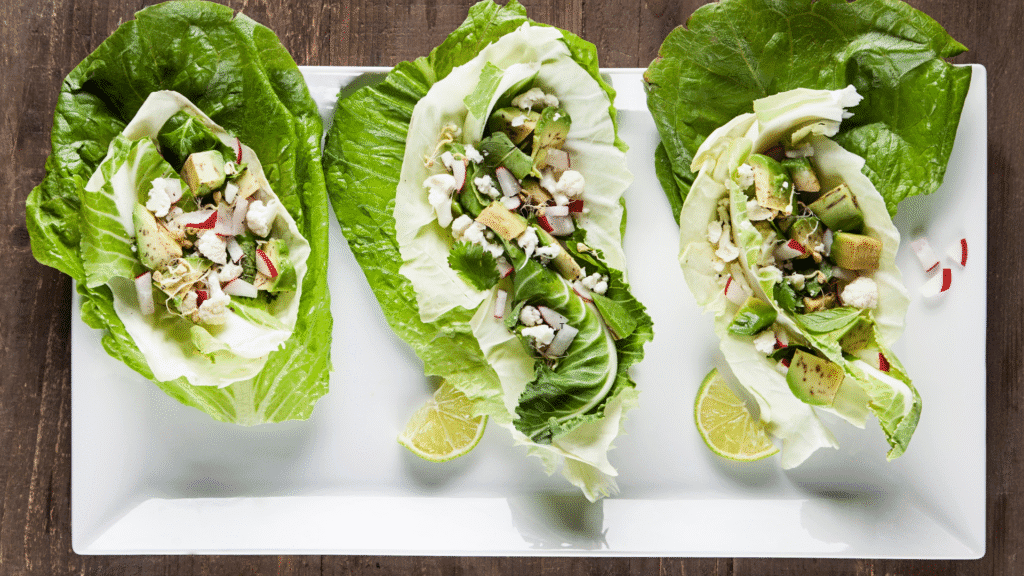
Use Corn Tortillas or Lettuce Wraps
Corn tortillas have fewer calories and less fat than flour tortillas, and are naturally gluten-free. If you’re cutting carbs, consider using romaine lettuce leaves as a wrap.
Watch the Cheese and Cream
Instead of piling on cheese and sour cream, use small amounts for flavor. Alternatively, swap in Greek yogurt or nutritional yeast for a similar taste with more protein and fewer calories.
Add More Fiber with Veggies
Vegetables like cabbage, bell peppers, onions, tomatoes, and avocado add fiber, vitamins, and bulk to your tacos, helping you feel full longer.
Skip the Fried Shells
Hard taco shells and chalupas are typically fried and soaked in oil, significantly increasing the fat content. Soft-shell options or baked taco shells are healthier substitutes.
Are Tacos Worse Than Other Takeout Foods?
Compared to a cheeseburger and fries or a loaded pizza, tacos can be relatively balanced, especially when you focus on lean protein and fresh toppings. Fast food tacos often have fewer calories than burgers, but the sodium and fat content can still be high.
Let’s compare a Taco Bell Crunchy Taco to a McDonald’s Cheeseburger:
| Item | Calories | Fat | Sodium | Protein |
| Taco Bell Crunchy Taco | 170 | 9g | 310mg | 8g |
| McDonald’s Cheeseburger | 300 | 13g | 720mg | 15g |
Tacos can be a lower-calorie fast food option, but the trade-offs are similar: high sodium, moderate protein, and questionable fat quality.
FAQs About Tacos and Weight Gain
Do tacos make you gain weight?
Only if you eat them in excess or make poor ingredient choices. Like any food, weight gain results from a caloric surplus—not tacos themselves.
Can I eat tacos on a diet?
Yes. Opt for lean proteins, whole-food toppings, and moderate portions. Tacos can fit into low-carb, high-protein, Mediterranean, or calorie-restricted diets.
Are vegetarian tacos better for you?
Often, yes. They’re usually lower in saturated fat and calories, but still high in fiber and plant-based protein if made with beans, lentils, or tofu.
How many tacos should I eat?
A typical healthy serving is two tacos, especially when balanced with a side of vegetables or salad.
Is guacamole healthy on tacos?
Absolutely. Avocado provides monounsaturated fats, fiber, and potassium. Just watch the portion size, as calories can add up quickly.
Final Thoughts
Tacos don’t deserve the “fattening” label; they deserve a closer look. While some restaurant or fast-food tacos can be high in calories, fat, and sodium, tacos made at home with fresh, simple ingredients can be a healthy and satisfying meal.
The key lies in the quality of ingredients, cooking methods, and portion size. Swap fried meats and flour tortillas for grilled options and corn wraps, and you’re well on your way to enjoying tacos that nourish your body as much as they satisfy your cravings.
