
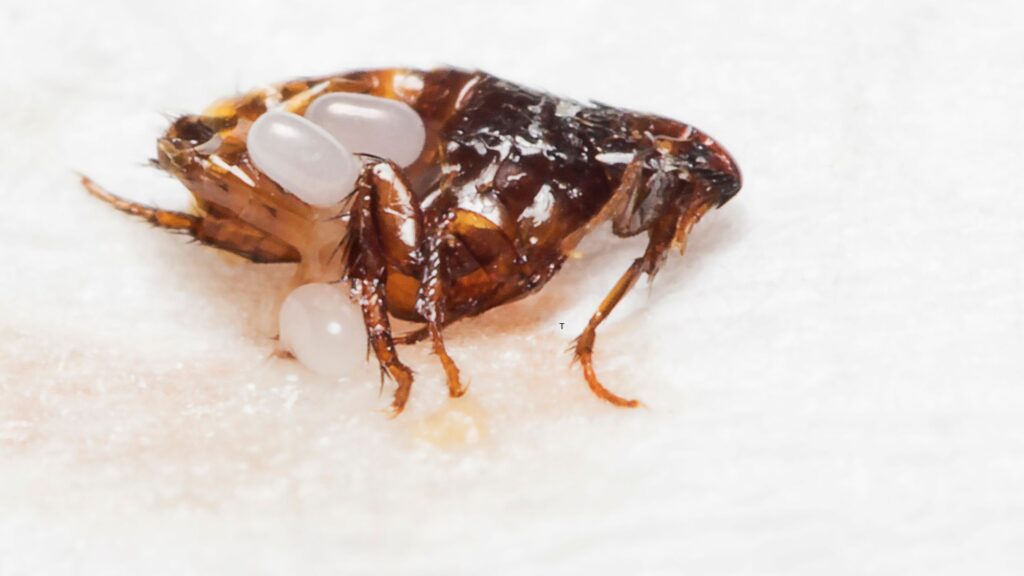
Flea infestations don’t start with adult fleas jumping around your pets or furniture. They begin much earlier, with tiny, nearly invisible eggs scattered across soft surfaces. Understanding how to identify these eggs is the first step toward preventing an outbreak in your home.
This guide will help you recognize flea eggs, understand where they hide, and take action with effective flea remedies before the problem spirals.
Table of Contents
ToggleWhat Flea Eggs Look Like
Flea eggs are often mistaken for dust or salt grains because of their size and appearance. They are oval-shaped, smooth, and measure less than half a millimeter in length. Their white or slightly translucent color makes them especially difficult to see on light fabrics or pet bedding.
Unlike dirt or debris, flea eggs don’t stick to surfaces. They roll easily, which means they spread quickly throughout your home as your pet moves around. Recognizing these eggs on bedding, carpets, and even cracks in flooring is key to spotting an infestation early.
Common Hiding Places for Flea Eggs
Flea eggs rarely remain on pets for long. Instead, they fall into the environment and settle where your animals spend time. You’re most likely to find them in the following areas:
- Pet bedding and blankets
- Carpets, especially in corners and edges
- Upholstered furniture
- Cracks in hardwood floors
- Dark, warm spaces like under furniture
Once flea eggs hatch, larvae burrow deeper into fabric or flooring, making them harder to detect. Regular inspections of these areas can help you notice a problem before adult fleas emerge.
How to Check Your Pet for Flea Eggs
Spotting flea eggs directly on your pet is difficult, but there are signs you can look for. Use a flea comb to carefully check the fur around the neck, tail, and belly, where fleas are most active. Eggs may appear as tiny white specks that slide through the comb’s teeth.
Another indicator is flea dirt, which looks like black pepper flakes. Place the debris on a damp paper towel. If it turns reddish-brown, it’s digested blood from fleas. Finding flea dirt alongside small white particles strongly suggests that eggs are present in your home.
Effective Flea Remedies for the Home
Once you’ve identified flea eggs, immediate action is necessary to break the cycle. Flea remedies should focus on cleaning, treating, and preventing re-infestation.
Cleaning Your Environment
Vacuuming daily is one of the most effective methods for removing flea eggs from carpets and furniture. Be sure to empty the vacuum outside to prevent eggs from hatching indoors. Washing pet bedding, blankets, and soft toys in hot water eliminates both eggs and larvae.
Home Treatments
Natural remedies like diatomaceous earth can be sprinkled on carpets and left for a few hours before vacuuming. This fine powder dries out flea eggs and larvae. Steam cleaning carpets also provides heat strong enough to destroy developing fleas at all stages.
Chemical Solutions
When infestations are widespread, chemical sprays and insect growth regulators (IGRs) are often recommended. IGRs prevent eggs from developing into adults, effectively stopping the cycle. Always choose pet-safe products and follow instructions carefully to avoid harm.
Flea Remedies for Pets
Addressing the environment is only half the battle. Pets must also be treated to stop fleas from laying new eggs. Options include:
- Topical treatments: Monthly spot-on medications applied directly to the skin.
- Oral medications: Pills or chewables that kill fleas when they bite your pet.
- Flea collars: Long-lasting protection that releases active ingredients gradually.
Consult your veterinarian before choosing a treatment. The right flea remedy depends on your pet’s age, weight, and overall health.
How to Prevent Flea Eggs in the Future
Prevention is easier than tackling a full infestation. Consistent grooming and the use of preventative flea remedies reduce the chance of eggs spreading in your home. Keep pet bedding clean and vacuum frequently, especially during warmer months when fleas thrive.
Regular vet checkups and year-round flea prevention help you stay ahead of potential outbreaks. By combining vigilance with reliable treatments, you can stop flea eggs from turning into a full-blown infestation.
Frequently Asked Questions
What do flea eggs look like?
Flea eggs are tiny, oval-shaped, and white or translucent. They resemble grains of salt and are about 0.5 mm long.
Where are flea eggs most commonly found?
They are usually found in pet bedding, carpets, upholstered furniture, and cracks in flooring.
How long do flea eggs take to hatch?
Under ideal conditions, flea eggs can hatch in as little as two days, though it may take up to two weeks.
Can vacuuming remove flea eggs?
Yes, regular vacuuming can significantly reduce flea eggs in carpets and upholstery. Always empty the vacuum outside.
Are natural flea remedies effective against eggs?
Yes, remedies like diatomaceous earth and steam cleaning can kill flea eggs and larvae without harmful chemicals.
Wrapping Up
Spotting flea eggs may be challenging, but knowing what to look for gives you an advantage. By identifying these early signs, you can act quickly with proven flea remedies for both your home and pets.
Regular cleaning, proper treatment, and preventative care ensure that fleas never gain a foothold.
