
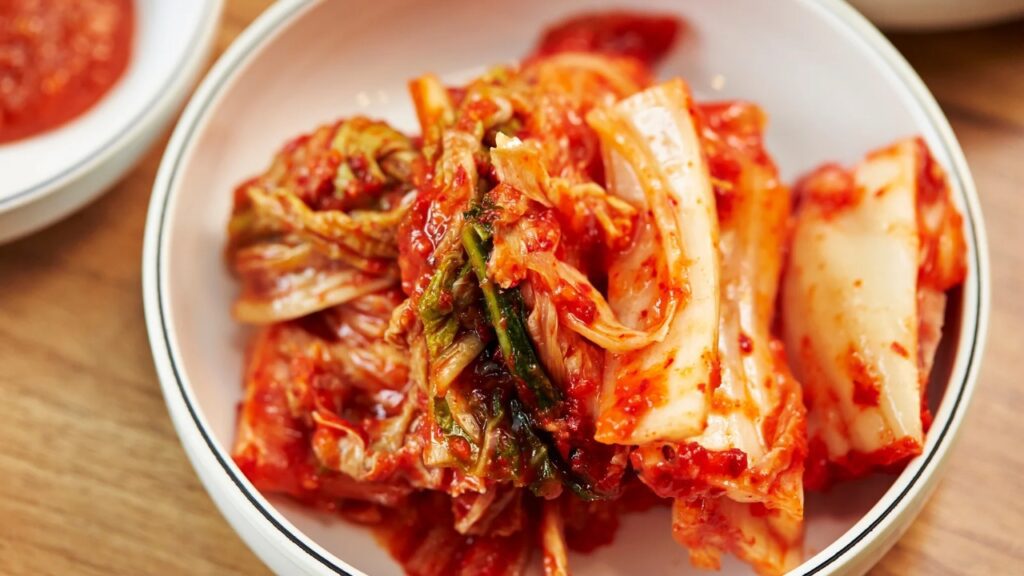
Kimchi is one of the most famous fermented foods in the world. If you’ve never tasted kimchi before, you might wonder: Is it too spicy? Too sour? Too strong?
The truth is that Kimchi has a complex, layered taste that can vary depending on several factors.
In this guide, we’ll explore the taste of kimchi in detail, health benefits and the best ways to enjoy kimchi.
Table of Contents
ToggleWhat is Kimchi?
Kimchi is a traditional Korean fermented vegetable dish, typically made with napa cabbage and Korean radishes. It’s seasoned with a combination of gochugaru (Korean red pepper flakes), garlic, ginger, scallions, fish sauce, and other spices before undergoing fermentation.
While napa cabbage kimchi (baechu-kimchi) is the most common variety, there are over 200 different types of kimchi, each with unique ingredients and preparation methods.
What Does Kimchi Taste Like?
The taste of Kimchi can vary depending on the ingredients, fermentation time, and preparation style. However, it is generally described as tangy, spicy, sour, umami-rich, and slightly sweet.
Fresh kimchi (1–2 days old) has a brighter, crisper flavor, while aged kimchi (several months old) develops a strong tanginess and deeper umami taste, making it ideal for cooked dishes like kimchi stew (kimchi jjigae).
Whether you prefer it fresh or aged, kimchi delivers a dynamic and unforgettable taste experience that evolves over time.
Does Every Kimchi Taste The Same?
No, not all kimchi tastes the same–different ingredients, fermentation times, and regional variations create distinct flavors. Here’s a comparison of different types of kimchi and how they taste:
| Type of Kimchi | Main Ingredients | Taste Profile |
| Baechu-kimchi (Cabbage kimchi) | Napa cabbage, gochugaru, garlic, ginger, fish sauce | Spicy, sour, umami-rich |
| Kkakdugi (Radish kimchi) | Cubed radish, gochugaru, garlic, ginger | Crunchy, spicy, slightly sweet |
| Baek-kimchi (White kimchi) | Napa cabbage, pear, garlic, ginger, no chili | Mild, slightly sweet, refreshing |
| Oi-sobagi (Cucumber kimchi) | Cucumbers, garlic, gochugaru | Crunchy, spicy, slightly salty |
| Yeolmu-kimchi (Young radish kimchi) | Young radish greens, garlic, chili | Fresh, peppery, slightly sour |
| Bossam-kimchi (Wrapped kimchi) | Cabbage, oysters, chestnuts, pine nuts | Rich, umami-heavy, slightly sweet |
Health Benefits of Kimchi
Kimchi isn’t just a delicious side dish; it’s a nutritional powerhouse with numerous health benefits.
1. Supports Gut Health with Probiotics
Kimchi is rich in probiotics, specifically lactobacillus bacteria, which improve digestion, enhance gut flora, and prevent bloating.
2. Strengthens the Immune System
The combination of vitamin C, antioxidants, and probiotics helps boost immunity, protecting against infections and inflammation.
3. Aids Weight Loss and Metabolism
Kimchi is low in calories but high in fiber, promoting satiety and supporting a healthy metabolism. Some studies suggest kimchi may help regulate fat metabolism.
4. Reduces Inflammation and Supports Heart Health
Kimchi contains polyphenols and flavonoids, which have anti-inflammatory properties and may reduce the risk of heart disease. The garlic in kimchi is also known to help lower cholesterol and blood pressure.
5. Rich in Vitamins and Antioxidants
Kimchi is loaded with vitamin A, vitamin C, and beta-carotene, which are essential for healthy skin, vision, and immune function.
6. May Reduce Blood Sugar Levels
Some studies suggest that fermented foods like kimchi can improve insulin sensitivity and help regulate blood sugar levels, benefiting those with diabetes.
Best Ways to Enjoy Kimchi
You can eat kimchi as a side dish, ingredient, or even a main course. Here are some delicious and easy ways to add kimchi to your meals:
1. Eat It as a Side Dish (The Traditional Way)
In Korean cuisine, kimchi is typically served as a banchan (side dish) alongside rice, soup, and grilled meats. If you’re new to kimchi, try eating a small portion with your meal to balance its bold flavors.
Pair kimchi with:
- Steamed white or brown rice
- Grilled meats (Korean BBQ, steak, chicken, or fish)
- Noodles (ramen, soba, or udon)
- Fried or scrambled eggs
2. Mix It into Fried Rice
Kimchi fried rice (Kimchi Bokkeumbap) is one of the easiest and most delicious ways to enjoy kimchi. The tangy, spicy, and umami-rich flavors of kimchi make fried rice extra flavorful.
How to make simple kimchi fried rice:
- Heat oil in a pan, then add chopped onions and garlic.
- Add ½ to 1 cup of chopped kimchi and stir-fry for 2–3 minutes.
- Add cold, cooked rice and mix well.
- Season with soy sauce, gochujang (Korean chili paste), or sesame oil.
- Top with a fried egg and chopped green onions.
3. Use It in Soups & Stews (Kimchi Jjigae)
Aged kimchi develops a strong, deep flavor that makes it perfect for soups and stews. One of the most famous Korean dishes is Kimchi Jjigae, a spicy and hearty kimchi stew.
Other soup ideas:
- Add chopped kimchi to ramen or miso soup for a spicy kick.
- Stir kimchi into chicken or vegetable soup for extra depth of flavor.
- Use it in tofu soup to make a delicious plant-based meal.
4. Add It to Tacos & Sandwiches
Kimchi’s crunch and bold flavor make it a perfect topping for tacos and sandwiches.
Try adding kimchi to:
- Grilled cheese sandwich – The combination of melted cheese and spicy, tangy kimchi is amazing!
- Burgers – Use kimchi instead of pickles for extra flavor.
- Tacos – Add chopped kimchi to pork or tofu tacos for a Korean-Mexican fusion.
- Avocado toast – A spoonful of kimchi adds a spicy and crunchy contrast.
5. Make Kimchi Pancakes (Kimchi Jeon)
Kimchi pancakes are a crispy, savory snack that’s easy to make. All you need is kimchi, flour, and a few basic ingredients.
Simple recipe for kimchi pancakes:
- Mix 1 cup of chopped kimchi with ½ cup of flour, ¼ cup of water, and one egg.
- Heat oil in a pan and pour the batter to form a thin pancake.
- Cook until golden brown and crispy on both sides.
- Serve with a soy sauce-based dipping sauce.
6. Toss It into Noodles or Pasta
Kimchi adds a spicy, tangy kick to noodle and pasta dishes.
Ideas for noodle dishes:
- Kimchi ramen – Stir kimchi into instant ramen for extra flavor.
- Cold noodle salad – Mix kimchi with soba or udon noodles, sesame oil, and soy sauce.
- Kimchi carbonara – Add chopped kimchi to a creamy pasta dish for a spicy twist.
Kimchi vs. Similar Fermented Foods
How does kimchi compare to other fermented vegetables?
| Food | Fermentation Process | Taste | Key Difference |
| Kimchi | Lactic acid fermentation | Spicy, sour, umami | Uses chili, garlic, fish sauce |
| Sauerkraut | Lactic acid fermentation | Sour, tangy | No spice, milder than kimchi |
| Pickles | Vinegar or lactic fermentation | Salty, tangy | Often lacks probiotics |
| Miso | Fermented soybean paste | Umami-rich, salty | Not a vegetable-based food |
So, Should You Try Kimchi?
Absolutely! Kimchi is a bold, flavorful, and incredibly nutritious food with a unique mix of sour, spicy, umami, and sweet flavors.
Plus, its ability to aid digestion, support heart health, and regulate blood sugar makes it a smart choice for anyone looking to improve their diet naturally.
If you’re new to kimchi, start with a milder, fresher version, or pair it with rice to balance the bold flavors. Over time, you might develop a taste for aged, tangier kimchi, perfect for soups and stews.