
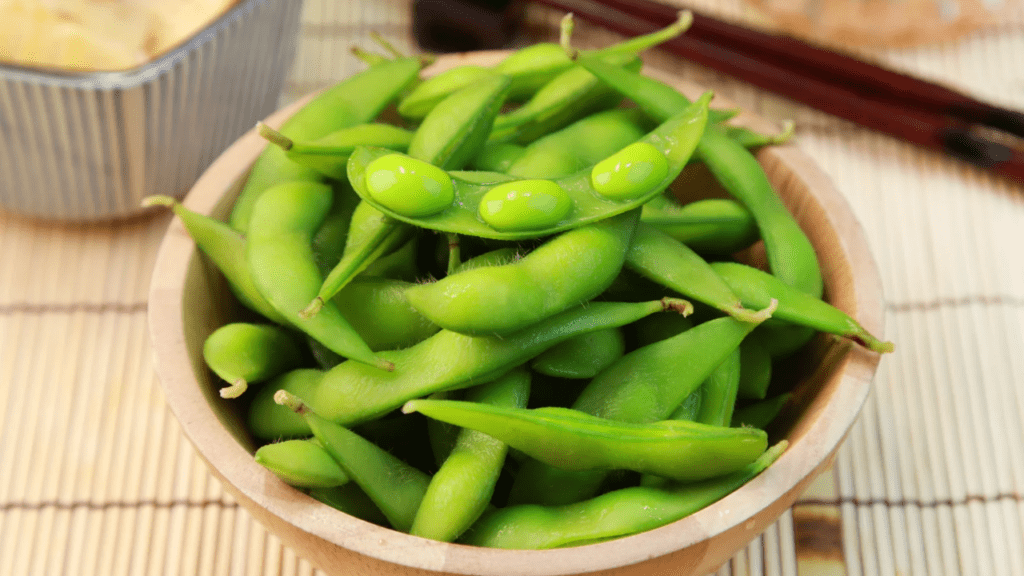
Edamame is a popular snack and side dish, especially in Asian cuisine. If you’re considering trying edamame for the first time, you might wonder what it tastes like.
Edamame has a slightly sweet and nutty flavour, but that’s not all there is. Let’s explore the taste of edamame in a bit more detail. You’ll also learn about its nutritional composition and best ways to enjoy edamame.
Table of Contents
ToggleWhat Is Edamame?
Edamame (pronounced “eh-dah-mah-may”) is a Japanese term that translates to “stem beans,” as they are traditionally sold still attached to the stem. These beans are harvested before they fully mature, giving them a distinct taste and texture compared to fully developed soybeans.
Unlike regular soybeans, which are hard and typically used for making tofu, soy milk, or soy flour, edamame is soft. It is commonly eaten as a snack, appetizer, or added to salads, soups, and stir-fries. Packed with protein, fiber, and essential vitamins, edamame is an excellent choice for anyone seeking a nutritious and satisfying plant-based food.
What Does Edamame Taste Like?
Edamame has a mild, slightly sweet, and nutty flavor with a hint of grassiness, similar to fresh peas or green beans. Its texture is firm yet slightly buttery, making it enjoyable to eat on its own or as part of various dishes.
When boiled or steamed, edamame develops a tender bite with a subtle umami taste, which pairs well with simple seasonings like sea salt, garlic, or soy sauce. The pods themselves are not eaten but are often salted to improve the overall flavor when popping the beans out.
Nutritional Composition of Edamame
Packed with protein, fiber, and essential vitamins, edamame is an excellent choice for anyone seeking a nutritious and satisfying plant-based food. Here’s the nutritional profile of edamame per 1 cup (155g) serving, according to USDA:
| Nutrient | Amount per 1 Cup (155g) | % Daily Value (DV)* |
| Calories | 188 kcal | 9% |
| Protein | 18.5 g | 37% |
| Carbohydrates | 13.8 g | 5% |
| Fiber | 8.1 g | 29% |
| Fats | 8.1 g | 12% |
| Saturated Fat | 1 g | 5% |
| Iron | 3.5 mg | 19% |
| Calcium | 98 mg | 10% |
| Magnesium | 99 mg | 24% |
| Potassium | 676 mg | 19% |
| Vitamin C | 9.5 mg | 11% |
| Vitamin K | 41.4 mcg | 52% |
| Folate | 482 mcg | 121% |
*% Daily Value (DV) is based on a 2,000-calorie diet.
How to Incorporate Edamame Into Your Diet
Edamame is incredibly versatile. Here are some delicious and easy ways to add it to your meals:
- As a Snack – Boil or steam edamame, sprinkle it with sea salt, and enjoy it straight from the pod.
- In Salads – Add shelled edamame to green salads, grain bowls, or pasta salads for a protein boost.
- In Stir-Fries – Toss edamame into vegetable or noodle stir-fries for added texture and nutrients.
- As a Hummus Alternative – Blend edamame with garlic, lemon juice, and olive oil to create a delicious spread.
- In Soups – Add shelled edamame to miso soup, ramen, or vegetable soups for extra heartiness.
- In Rice and Grain Dishes – Mix edamame into fried rice, quinoa bowls, or risottos for a nutritious touch.
- Roasted for a Crunchy Snack – Bake edamame with olive oil and seasoning for a crunchy, high-protein snack.
Edamame vs. Green Peas: Key Differences
Edamame and green peas may look similar, but they have distinct characteristics. Here’s how they compare:
| Feature | Edamame | Green Peas |
| Taste | Mild, nutty, slightly sweet | Sweet, grassy, slightly starchy |
| Texture | Firm yet creamy | Soft and slightly mushy |
| Protein Content | High in plant-based protein | Moderate protein content |
| Usage | Often eaten as a snack, in Asian dishes | Common in soups, stews, and side dishes |
While both are nutritious, edamame stands out for its higher protein content and firmer texture, making it a better option for those looking for a filling, plant-based protein source.
Wrapping Up
Edamame is a delicious and nutritious food with a mildly nutty, slightly sweet taste and a firm yet creamy texture. It can be enjoyed in various ways, from simple snacks to hearty meals, making it a versatile and healthy addition to any diet.
Compared to green peas, edamame stands out as a superior plant-based protein source, making it an excellent choice for those following a vegetarian or vegan lifestyle.
