
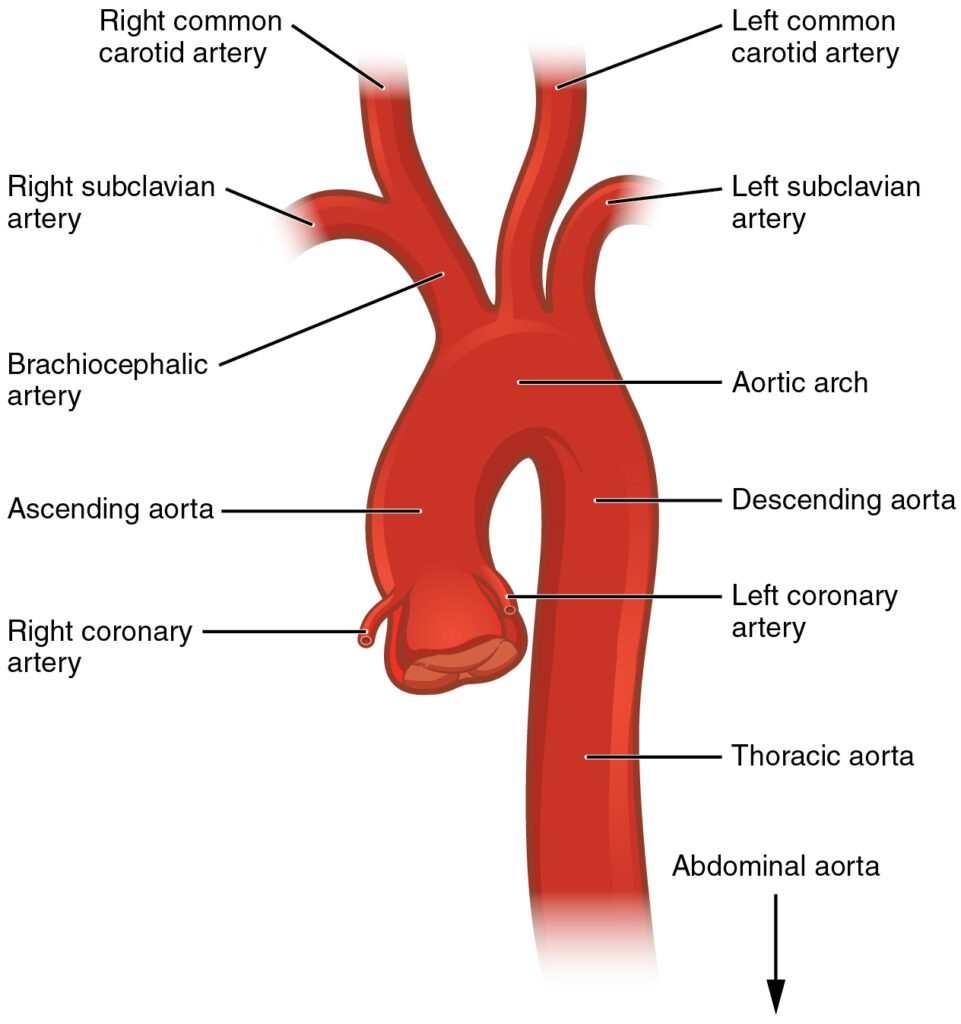
The Truncus Brachiocephalicus is one of those structures that can seem deceptively simple but is foundational to understanding how oxygenated blood reaches the head, neck, and right upper limb.
If you are a student trying to master the arterial anatomy of the thorax, this article will teach you not just what it is, but why it matters clinically and how to visualize its course and relationships as you prepare for dissections and exams.
Table of Contents
ToggleWhat Is The Truncus Brachiocephalicus
The Truncus Brachiocephalicus is more commonly known in clinical anatomy as the brachiocephalic trunk or innominate artery.
It is the first and largest branch of the aortic arch and serves a pivotal role in systemic circulation by directing oxygenated blood from the heart towards the right side of the upper body. It typically measures about 4 to 5 cm in length and is found in the superior mediastinum just above the heart.
Think of this artery as a major arterial gateway to the right side of the head, neck, and upper limb. Unlike other major branches of the aorta that originate independently, the Truncus Brachiocephalicus is unique because it divides quickly into two critical arteries shortly after its origin.
Course of The Truncus Brachiocephalicus
It arises from the aortic arch posterior to the manubrium of the sternum. From there, it travels superiorly, posteriorly, and to the right across the midline anterior to the trachea towards the root of the neck.
This means it lies in close contact with the trachea posteriorly and several important veins and nerves anteriorly and laterally.
Before dividing, the trunk reaches the right sternoclavicular joint where it bifurcates into:
- Right common carotid artery
- Right subclavian artery
These divisions mark the end of the trunk and the beginning of the arterial pathways supplying the head, neck, and arm.
Branches And Vascular Territories
Although the Truncus Brachiocephalicus itself does not have major branches before it divides, its terminal branches are essential:
1. Right Common Carotid Artery
This branch ascends in the neck within the carotid sheath. It bifurcates further into the external carotid artery, which supplies the face and neck, and the internal carotid artery, which supplies the brain.
2. Right Subclavian Artery
This vessel travels laterally towards the right upper limb. Before it continues as the axillary artery, it gives off the vertebral artery, which ascends into the cranium to contribute to cerebral circulation.
Sometimes, anatomical variations occur. For instance, a small thyroid ima artery may arise from the trunk itself in some individuals. This variant is not common, but important to know for surgical procedures involving the thyroid gland.
Anatomical Relations You Must Know
The Truncus Brachiocephalicus is found in a very busy region:
- Anteriorly, it is related to parts of the thymus, veins of the lower neck, and superficial muscles.
- Posteriorly, it lies near the trachea and portions of the right pleura.
- Laterally, it lies close to major veins such as the superior vena cava and brachiocephalic veins.
These relationships are not trivial. In trauma, thoracic surgery, and even tracheostomy placement, knowledge of where this artery runs helps avoid catastrophic bleeding.
Embryology And Development
From an embryological perspective, the trunk develops from the right horn of the aortic sac and parts of the third and fourth pharyngeal arches.
This background helps explain why the artery is asymmetric and why variations in its formation are possible. Such variants include a bovine arch pattern, in which the left common carotid shares a common origin with the Truncus Brachiocephalicus.
FAQ Section
What does the Truncus Brachiocephalicus supply?
It supplies oxygenated blood to the right side of the head, neck, and upper limb through its terminal branches, the right common carotid and right subclavian arteries.
Why is the Truncus Brachiocephalicus clinically important?
Its location near critical structures like the trachea and large veins means that vascular injury or variation can have significant surgical and diagnostic implications.
Can it be involved in disease?
Yes. It can be affected by aneurysm formation and atherosclerosis, though less commonly than other arteries.
Sources
- Kenhub on Brachiocephalic Trunk Anatomy and Branches. (Kenhub)
- Cleveland Clinic overview on Brachiocephalic Artery. (Cleveland Clinic)
- NCBI Text on Brachiocephalic (Innominate) Arteries. (NCBI)
- Radiopaedia article on Brachiocephalic Trunk. (radiopaedia.org)
- TeachMeAnatomy on Aortic Arch Branches. (teachmeanatomy.info)
