
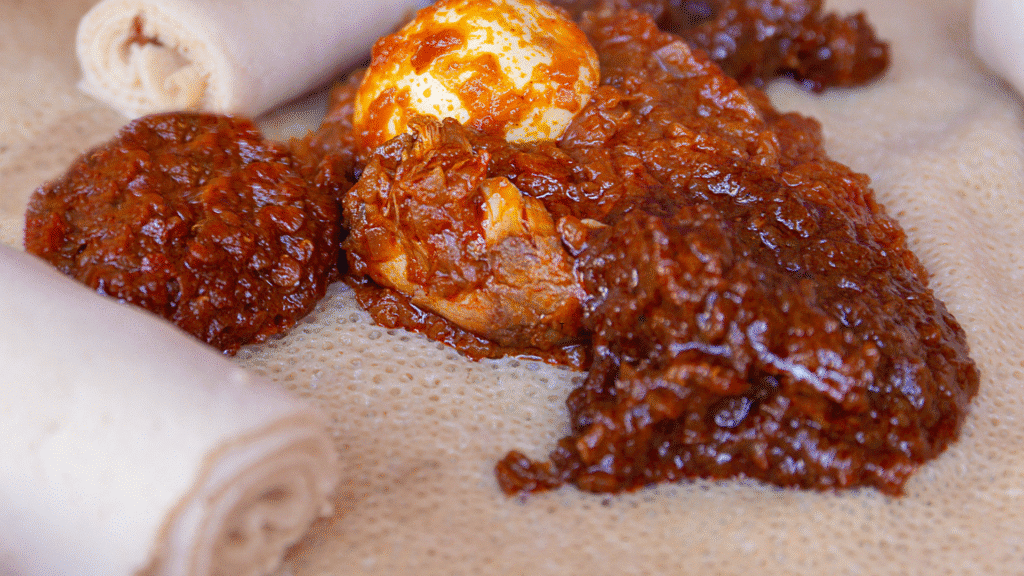
If you’re looking for the ultimate prize in Ethiopian food recipes, you’ve found it: Doro Wat. This spicy, complex chicken and egg stew is Ethiopia’s national dish and the centerpiece of any authentic feast. It’s often served with hard-boiled eggs and accompanied by injera, a spongy flatbread.
In this guide, we will walk you through how to make this authentic Ethiopian food recipe in just two hours. Using fresh ingredients and the right spices, this food recipe will bring the flavors of Ethiopia straight to your table. Let’s get into it!
Ingredients for Authentic Doro Wat
To make the perfect Doro Wat, you’ll need to gather a few key ingredients that give the dish its signature flavor. Below are the essential components of this traditional Ethiopian recipe:
- Chicken drumsticks or thighs: The primary protein in Doro Wat, providing tenderness and flavor.
- Berbere spice mix: A staple in Ethiopian cuisine, this spice blend is a combination of chili peppers, garlic, ginger, cumin, cinnamon, and more. It’s the heart of the dish’s bold, spicy flavor.
- Niter kibbeh: A spiced clarified butter that adds richness and depth to the stew.
- Red onions: Thinly sliced onions are cooked down to create a base for the sauce.
- Tomatoes: Fresh tomatoes add acidity and balance to the dish.
- Garlic and ginger: Freshly grated garlic and ginger bring a punch of flavor that complements the spices.
- Hard-boiled eggs: These are simmered in the stew and absorb the rich sauce, adding a comforting element to the dish.
How to Prepare the Doro Wat Stew

Step 1: Prepare the Chicken
Begin by washing the chicken pieces thoroughly. You can use bone-in chicken drumsticks or thighs for the best flavor. Make a few small slits in the chicken to allow the marinade to penetrate. Marinate the chicken with a pinch of salt, a little bit of the Berbere spice mix, and some lemon juice. Let it sit for about 30 minutes to absorb the flavors.
Step 2: Cook the Onions
In a large pot or Dutch oven, heat about 1/4 cup of niter kibbeh over medium heat. Add the sliced red onions and cook them slowly, stirring frequently. The goal here is to caramelize the onions, which takes about 20-30 minutes. The onions should become soft, brown, and slightly sweet. This step is critical, as it forms the base for the rich stew.
Step 3: Add the Spices
Once the onions are caramelized, add the remaining Berbere spice mix, grated garlic, and grated ginger to the pot. Stir to combine, letting the spices toast for a few minutes until fragrant. The spices will deepen in color, and the mixture will begin to form a thick, flavorful paste.
Step 4: Add Tomatoes
Next, add chopped tomatoes to the pot. Stir well, allowing the tomatoes to break down and cook into the spice paste. This will create a flavorful sauce base. Let the mixture simmer for about 10 minutes, until the tomatoes soften and integrate into the sauce.
Step 5: Cook the Chicken
Add the marinated chicken pieces to the pot, making sure they’re coated in the spice mixture. Pour in enough water to just cover the chicken. Bring the stew to a boil, then lower the heat and cover the pot. Let it simmer for about 1 hour, or until the chicken is fully cooked and tender.
Step 6: Add the Eggs
While the chicken is cooking, prepare the hard-boiled eggs. Once they’re ready, carefully peel them and add them to the stew during the final 15 minutes of cooking. The eggs will absorb the flavors of the stew, making them a delicious addition to the dish.
Serving the Doro Wat
Doro Wat is traditionally served with injera, a type of Ethiopian flatbread made from teff flour. The tangy, spongy texture of injera pairs perfectly with the rich and spicy stew, allowing you to scoop up the chicken and sauce with each bite.
To serve, place a generous portion of the Doro Wat on a large platter with a few pieces of injera on the side. You can garnish the dish with a little extra Berbere for added heat or some fresh cilantro for a touch of freshness.
Tips for Perfect Doro Wat
- Use quality Berbere: The Berbere spice mix is the key to Doro Wat’s flavor. If you can, make your own at home or purchase a high-quality blend from a reputable source.
- Slow-cook the onions: Don’t rush the onion cooking process. The slower you cook them, the more caramelized and flavorful they’ll become.
- Adjust the heat: Doro Wat is meant to be spicy, but you can adjust the amount of Berbere to suit your taste preferences. If you prefer a milder dish, use less of the spice mix.
- Simmer the chicken well: Let the chicken cook slowly to absorb all the flavors of the sauce. The longer it simmers, the better it will taste.
What are some variations of Doro Wat and Injera I can try?
There are many ways to customize Doro Wat and Injera to your liking. For example:
- Add vegetables: You can add vegetables like potatoes or carrots to Doro Wat to give it more texture and make it heartier.
- Adjust the spice level: If you prefer a milder version, reduce the amount of Berbere spice mix or use a milder chili powder in place of the traditional hot peppers.
- Vegan version: For a vegetarian or vegan version, you can replace the chicken with tofu or tempeh and omit the eggs. Use the same base of Berbere and niter kibbeh for flavor.
Frequently Asked Questions (FAQs) About Doro Wat and Injera
What is the best way to serve Doro Wat and Injera?
The best way to serve Doro Wat and Injera is by placing a generous portion of the Doro Wat stew in the center of a large platter and surrounding it with pieces of injera. The spongy, slightly sour texture of injera perfectly complements the rich and spicy chicken stew. Traditionally, you would tear pieces of injera to scoop up the stew, making for a delightful and communal dining experience.
Can I freeze Doro Wat and Injera for later?
Yes, you can freeze Doro Wat and Injera for later. To freeze Doro Wat, let it cool completely and store it in an airtight container or freezer bag. It can last for up to 3 months in the freezer. When reheating, simply thaw and heat it on the stovetop. As for injera, it can be frozen as well. Wrap the pieces of injera in plastic wrap and store them in a freezer bag. When you’re ready to eat, thaw the injera at room temperature or gently heat it in a pan.
What is the difference between Doro Wat and Doro Wot?
Doro Wat and Doro Wot refer to the same dish: Ethiopian chicken stew. Some people spell it Doro Wot, while others use the traditional spelling Doro Wat. The key to authentic preparation is the Berbere spice mix and the use of niter kibbeh.
Wrapping Up
Making authentic Doro Wat at home may seem like a challenge, but with the right ingredients and a bit of patience, you can recreate this delicious Ethiopian dish in just two hours. The combination of tender chicken, flavorful Berbere spices, and the richness of niter kibbeh makes this stew an unforgettable experience for your taste buds.
Whether you’re cooking for a special occasion or just craving some authentic Ethiopian food, Doro Wat is sure to impress. Serve it with injera for the ultimate Ethiopian dining experience, and enjoy the warmth and comfort of this beloved dish.
