
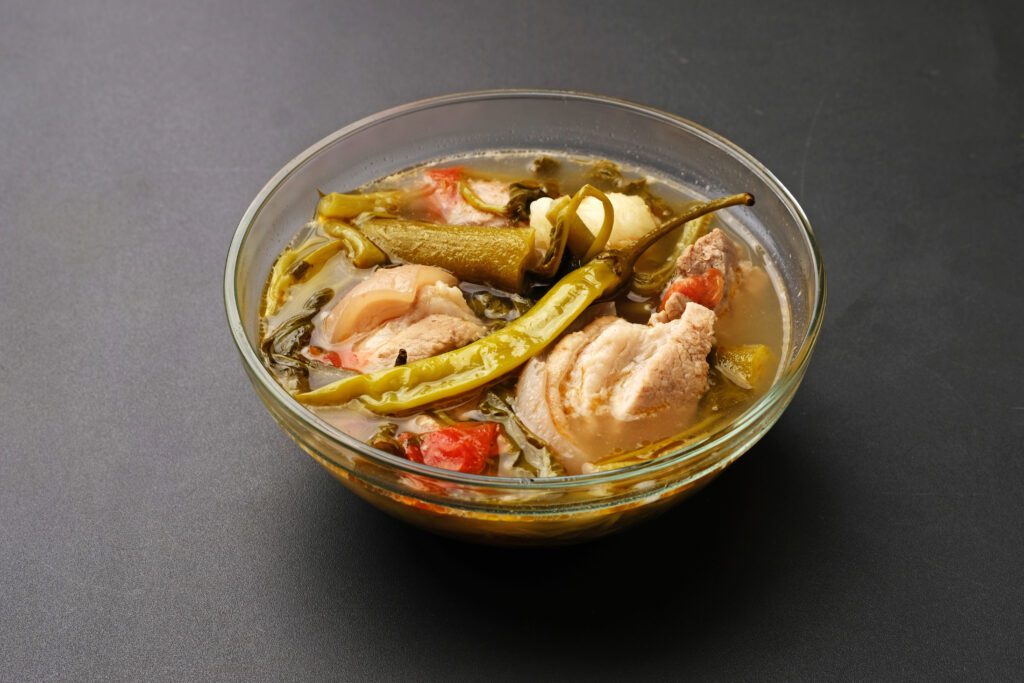
Sinigang is one of the most beloved dishes in Filipino cuisine. Its mouthwatering tanginess sets it apart from other Asian soups like tom yum, making it a staple in many Filipino households, especially during rainy days.
This article explains what sinigang is, how it’s made, and the best ways to enjoy this delicious dish.
What Is Sinigang?
Sinigang is a Filipino soup or stew characterized by its sour and savory broth. The dish’s signature tang comes primarily from tamarind, though other souring agents like green mango, calamansi, or even tomatoes are sometimes used.
Traditionally, sinigang is made with pork (sinigang na baboy), but variations include beef, shrimp (sinigang na hipon), fish, and even chicken. Some versions include additional ingredients like gabi (taro) for a thicker broth, while others use pineapple for a slightly sweeter twist.
How Is Sinigang Made?
The process of making sinigang is relatively simple but requires careful balancing of flavors. Here’s a general step-by-step guide to preparing a traditional pork sinigang:
Ingredients:
- 1 kg pork ribs or belly
- 1 packet of tamarind soup mix (or fresh tamarind, boiled and strained)
- 6 cups of water
- 2 medium tomatoes, quartered
- 1 onion, sliced
- 10 pieces of string beans, cut into 2-inch pieces
- 1 small radish, sliced
- 1 eggplant, sliced
- 1 bunch of water spinach (kangkong)
- 2-3 pieces of okra
- 2-3 green chili peppers (optional)
- Salt and fish sauce to taste
Cooking Instructions:
- Boil the Pork: In a large pot, bring water to a boil. Add pork, tomatoes, and onions. Simmer for about 45 minutes or until the meat is tender.
- Add the Souring Agent: If using a tamarind soup mix, dissolve it in the broth. If using fresh tamarind, boil the pods separately, mash them, and strain the juice into the pot.
- Add Vegetables: Start with radish and string beans, as they take longer to cook. Then, add eggplant, okra, and green chili peppers.
- Season the Broth: Adjust the flavor with fish sauce and salt. Let everything simmer for another 5–10 minutes.
- Final Touch: Add water spinach last, as it wilts quickly. Let it cook for a minute before turning off the heat.
- Serve Hot: Enjoy sinigang with steamed rice and a side of fish sauce with chopped chili for an extra kick.
How to Enjoy Sinigang

Sinigang is best enjoyed fresh and steaming hot, paired with a bowl of white rice. Here are some ways to enhance your sinigang experience:
- Pair with Condiments: A dipping sauce of fish sauce, calamansi, and chili adds extra depth to the flavors.
- Try Different Proteins: Aside from pork, experiment with shrimp, beef, or fish for a different twist on the classic.
- Customize the Sourness: Adjust the level of tanginess to your preference by adding more or less tamarind.
- Serve with Side Dishes: Sinigang goes well with grilled or fried dishes like crispy pork belly (lechon kawali) or fried fish.
Frequently Asked Questions
Is sinigang healthy?
Yes! Sinigang is packed with vegetables and lean proteins, making it a nutritious dish. However, it’s best to moderate the use of salty seasonings like fish sauce.
Can I use other souring agents besides tamarind?
Yes! Aside from tamarind, you can use green mango, calamansi, santol, or even tomatoes to achieve sinigang’s signature sourness.
What is the best meat for sinigang?
Pork is the most common choice, particularly pork ribs or belly, but beef, shrimp, and fish are also popular alternatives.
Can I make sinigang vegetarian?
Absolutely! You can replace meat with tofu or mushrooms while keeping the traditional sour broth and vegetables.
What is the difference between sinigang and other Filipino soups like nilaga or bulalo?
Sinigang is sour, while nilaga and bulalo have a rich and slightly sweet beef broth without any acidity.
How long does sinigang last in the fridge?
Sinigang can last up to 3 days in the refrigerator. Simply reheat before serving, and it will taste just as good.
Wrapping Up
Sinigang is a traditional Filipino soup or stew characterized by its tangy and slightly tart broth. The dish is typically made with pork, beef, shrimp, or fish, simmered with vegetables such as kangkong (water spinach), eggplant, tomatoes, and radish.
If you’re trying sinigang for the first time, expect a hearty and flavorful soup that is both satisfying and nourishing.