

Acorn squash and butternut squash are probably the first two that come to mind when you think about squashes. Though both are members of the same family, Cucurbitaceae, these squashes are completely different in flavor and texture.
In this article, we highlight the differences between acorn squash and butternut squash, and how they both can be used in the kitchen. We also provide some recipe ideas to get you started.
Differences Between Acorn Squash and Butternut Squash
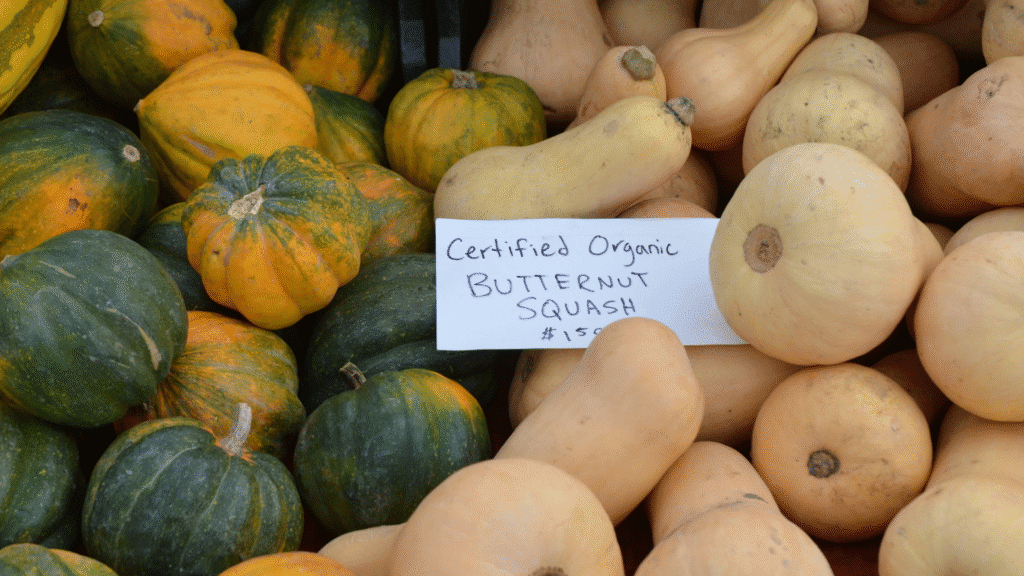
1. Acorn vs. Butternut Squash: Shape and Appearance
Acorn squash (Cucurbita pepo var. turbinata) is usually dark green with deep ridges and looks like an acorn. There are also some varieties with orange or white skins. It’s easy to spot in the grocery store, with its compact, round shape.
Butternut squash, on the other hand, has a long and bulbous shape similar to a pear. Its skin is smooth and beige.
2. Acorn vs. Butternut Squash: Nutritional Value
Acorn squash is higher in dietary fiber and potassium, ideal for digestive health and blood pressure regulation. It has about 9 grams of fiber per one-cup serving and is a bit higher in calories than butternut squash.
Butternut squash is excellent for vision, immunity, and skin health due to its high vitamin A and C content. Below is a table showing the nutrition of baked butternut squash vs. acorn squash:
| Nutrient | Acorn Squash (205g) | Butternut Squash (205g) |
| Calories | 115 | 82 |
| Protein | 2.3g | 1.8g |
| Total Fat | 0.3g | 0.2g |
| Carbohydrates | 30g | 22g |
| Fiber | 9g | 7g |
| Vitamin A | 43 mcg (5% DV) | 1140 mcg (127% DV) |
| Vitamin C | 22 mg (25% DV) | 31 mg (34% DV) |
| Vitamin B1 (Thiamin) | 0.34 mg (28% DV) | 0.15 mg (13% DV) |
| Vitamin B5 (Pantothenic acid) | 1 mg (20% DV) | 0.7 mg (14% DV) |
| Potassium | 896 mg (19% DV) | 582 mg (12% DV) |
| Magnesium | 88 mg (21% DV) | 59 mg (14% DV) |
| Calcium | 20 mg (2% DV) | 84 mg (6% DV) |
| Iron | 1.9 mg (11% DV) | 1.2 mg (7% DV) |
3. Acorn vs. Butternut Squash: Flavor and Texture
Butternut squash is sweet and buttery, often compared to a combination of pumpkin and sweet potato. Cooked, it is smoother and creamier, perfect for soups, purees, and sauces.
The flavor of acorn squash is mild and nutty, with a slightly fibrous, dense texture. This makes it suitable for roasting and stuffing, as it holds its shape well without turning overly mushy.
4. Acorn vs. Butternut Squash: Storage and Shelf Life
Acorn squash has a more delicate skin and doesn’t store as long as butternut squash. If stored in a cool, dark place, acorn squash will last up to a month.
Butternut squash, on the other hand, can last up to three months. It’s thicker skin and dense flesh make it more durable. Consider freezing squashes to extend its shelf life.
5. Acorn vs. Butternut Squash: Cooking method
Its naturally bowl-shaped cavity makes acorn squash a popular choice for stuffing. It’s perfect for fillings like grains, vegetables, and proteins, complementing both savory and sweet seasonings.
Butternut squash, with its smooth, creamy flesh, is commonly used in purees, soups, and casseroles. It pairs exceptionally well with herbs like sage and thyme. Below are some recipe ideas to guide you.
Recipe Ideas for Butternut Squash
1. Roasted Butternut Squash with Orange Tahini Sauce
- Ingredients: Tahini, orange juice, walnuts, za’atar seasoning, butternut squash.
- Instructions: Place cubed squash in the oven until caramelized. While at that, make a creamy dressing of tahini mixed with fresh orange juice. For an additional veggie side, drizzle the roasted squash with the sauce, add some toasted walnuts, and sprinkle za’atar.
2. Ginger Butternut Squash and Coconut Milk Soup
- Ingredients: Butternut squash roasted, fresh ginger, coconut milk, vegetable broth.
- Instructions: Roasted butternut squash is sweet, so start by roasting it, and blend it with fresh ginger, coconut milk, and broth until creamy and dairy-free.
3. Butternut Squash and Turkey Chili
- Ingredients: Butter, ground turkey, butternut squash cubes, bell peppers, kidney beans, and chili spices.
- Instructions: In a large pot, brown some turkey, add chopped vegetables and cubed butternut squash. Simmer with beans, spices, and a bit of tomato sauce until everything is tender. The squeeze of the squash helps lessen the burn created by the heat.
Butternut Squash Recipe Ideas
1. Apple-Stuffed Acorn Squash
- Ingredients: Apples, onions, cheese, and optional add-ins of bacon or brown sugar, and acorn squash.
- Instructions: Cut the acorn squash in half, remove the seeds, and fill the halves with a mixture of diced apples, onions, and cheese. You can also include some brown sugar or bacon to enhance its taste.
2. Honey Butter Roasted Acorn Squash with Burrata and Pomegranate
- Ingredients: Honey, butter, burrata cheese, pomegranate arils, and Acorn squash.
- Instructions: Place acorn squash halves in a honey-butter glaze and roast until caramelized. Finish it off with creamy burrata cheese and some fresh pomegranate seeds for a fun, contrasting taste and texture.
3. Feta, Quinoa and Pistachio Stuffed Acorn Squash
- Ingredients: Roasted acorn squash, cooked quinoa, feta cheese, pistachios and herbs.
- Instructions: Roast the squash until tender, then stuff with quinoa, feta and chopped pistachio mixture. This dish is balanced and very nutritious, with its salty, sweet and nutty flavor.
Final thoughts
Acorn squash and butternut squash differ primarily in shape, texture, and flavor: Butternut squash is elongated, sweet, creamy; acorn squash is smaller, ribbed, and has a mild, nutty taste.
Both are nutritious, and can contribute in very special ways in a lot of dishes. In terms of shelf life, butternut squashes last longer.