
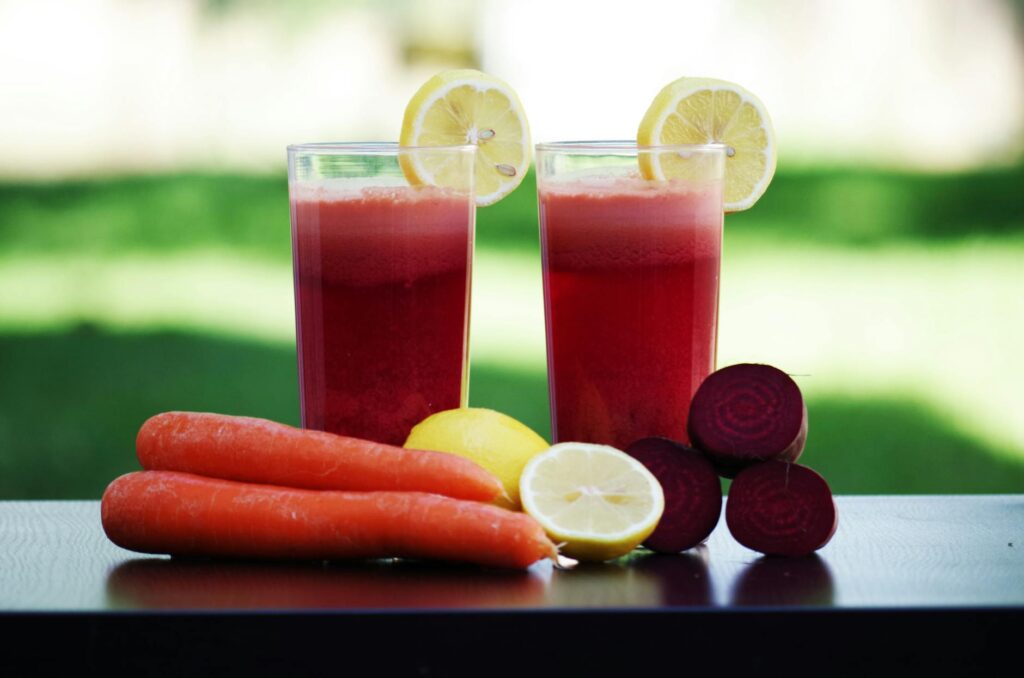
Beetroot, scientifically known as Beta vulgaris, is a nutritious vegetable with several health benefits. They are particularly renowned for their high nitrate content, which the body converts into nitric oxide, aiding blood flow, lowering blood pressure, and more.
In this article, we discuss seven health benefits of beetroot juice, potential side effects and how to make beet juice.
Table of Contents
ToggleNutritional composition of beetroot juice
Beetroot juice is rich in magnesium, folate, potassium, and phytonutrients like betalains, which gives beet its deep red color. Here’s the nutritional composition of beet juice per 100 grams:
- Calories: 43 kcal
- Protein: 1.6 g
- Fat: 0.2 g
- Carbohydrates: 9.6 g (of which sugars are about 7.0 g)
- Fiber: 2.8 g
- Vitamin C: 4 mg ( 5% of the Daily Value, DV)
- Potassium: 325 mg (7% DV)
- Magnesium: 23 mg (6% DV)
- Iron: 0.79 mg (about 5% DV)
- Folate (Vitamin B9): 80 mcg (20% DV)
- Calcium: 16 mg (2% DV)
Health benefits of beetroot juice
Beetroot juice has gained popularity as a superfood due to its impressive health benefits. Here’s why you might consider incorporating beetroot juice into your diet:
Improves cardiovascular health
Numerous studies have shown that drinking beetroot juice can help lower blood pressure. The nitrate in beetroot is converted into nitric oxide, which dilates blood vessels, promoting better blood flow and potentially lowering blood pressure. This process can significantly reduce the risk of heart attacks, strokes, and other cardiovascular diseases.
Boosts stamina and endurance
The nitrates in beetroot juice also enhance the function of mitochondria, which is responsible for producing energy in our cells.
Research indicates that consuming beetroot juice can increase plasma nitrate levels and boost physical performance, particularly during high-intensity endurance activities.
Supports liver health
Beetroot juice contains high levels of betaine, a compound that supports healthy liver function, preventing the accumulation of fatty deposits in the liver. Additionally, betaine has been shown to protect the liver from toxins and may enhance its regenerative capacity.
May help reduce inflammation
Beetroot juice is rich in betalains, which have potent anti-inflammatory properties. These compounds have been studied for their potential to reduce pain and discomfort associated with inflammatory conditions like osteoarthritis.
Antioxidant effects
The antioxidants in beetroot, such as vitamin C, betalains, and other phenolic compounds, help to neutralize free radicals that cause oxidative stress. Regular consumption of beetroot juice may help reduce oxidative stress and protect against chronic diseases such as heart disease and certain cancers.
Aids cognitive function
There is growing evidence that the high nitrate content in beetroot juice may improve mental and cognitive functions by increasing blood flow to the brain. Some studies suggest that beetroot juice could potentially slow the progression of dementia.
Supports diabetes management
Beetroot juice has a low glycemic index, which means it doesn’t cause rapid spikes in blood sugar levels. This, along with its high fiber content, makes it beneficial for managing blood sugar levels. Additionally, the antioxidants and nutrients in beetroot may help in the overall management of diabetes.
Potential side effects of beetroot juice
While beetroot juice is generally safe for most people, it can cause some side effects, particularly when consumed in large amounts:
- Beeturia: Consuming beetroot juice can cause beeturia, a condition where your urine and stools temporarily turn reddish or pinkish. While this is harmless, it can be alarming if unexpected.
- Kidney stones: Beetroot juice contains high levels of oxalates, which can contribute to the formation of kidney stones in susceptible individuals. If you have a history of kidney stones, you might want to moderate your intake or consult with a healthcare professional.
- Stomach upset: Some people might experience stomach upset or diarrhea due to the high levels of betaine in beetroot. Starting with a small amount and gradually increasing it can help your digestive system adjust.
- Low blood pressure: Because beetroot juice can lower blood pressure due to its nitrate content, consuming it in large amounts might cause blood pressure to drop too low, especially if you take blood pressure medication.
How to make beetroot juice
To prepare beet juice at home, you only need two medium-sized beets and water. You may also add apples and ginger for more sweetness. Here’s what to do:
- Wash and peel the beetroots, then chop them into small chunks that easily fit into your juicer or blender.
- If you choose to add an apple, wash, core, and cut it into wedges. Peel and slice the ginger.
- Now, add the cut beetroot, apple, and ginger to the blender, with a small amount of water. Blend until smooth.
- Once blended, pour the mixture over a strainer or cheesecloth into a container, pressing with a spoon or hands to extract as much juice as possible.
- Your beetroot juice is ready! You can drink immediately or serve chilled. Remember to stir well before drinking, as the juice may separate over time.
Frequently Asked Questions
What is the best time to drink beetroot juice?
You can drink beetroot juice at any time of day, but consuming it in the morning or an hour before exercise can help boost your energy levels throughout the day.
Can pregnant women drink beetroot juice?
Beetroot juice is safe for most pregnant women and provides beneficial nutrients like folic acid. Still, it’s advisable to consult a healthcare provider before adding it as a regular part of a pregnancy diet.
Can beetroot juice help with weight loss?
Beetroot juice is not an instant solution for weight loss but can be a beneficial addition to a healthy diet due to its low-calorie count and high nutrient density.
Conclusion
Beetroot juice is a powerhouse containing a variety of vitamins and minerals, including vitamin C, folate, vitamin B6, magnesium, and potassium. The most significant property of beetroot juice is its high nitrate, which the body converts into nitric oxide—a molecule that helps regulate blood pressure and boost energy. Additionally, if you’re looking to lower inflammation through diet, beetroot juice can be a beneficial addition.